



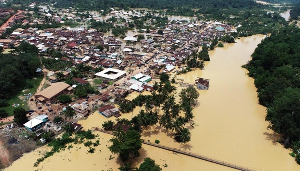
 File photo of Sameriboi township when it got flooded
Residents of Samreboi in the Western North Region who were displaced by recent flooding have been urged not to rush back to their homes despite the receding floodwaters, as authorities move to prevent a possible public health crisis in the affected communities.
The National Disaster Management Organisation (NADMO) says many of the flooded homes remain unsafe for habitation due to contamination and damage caused by the disaster, making it necessary for fumigation and safety assessments to be completed before residents can return.
'Only 5 to 10 percent of Samreboi flooded' – Regional Minister
The warning comes as hundreds of families continue to grapple with the aftermath of the floods, which swept through parts of Samreboi after the Samre and Tano rivers overflowed following heavy rainfall.
Speaking to Citi News, the Deputy Municipal NADMO Director for Wassa Amenfi, Christopher Bevel, disclosed that the disaster left a trail of destruction across the area, with scores of homes either destroyed or severely damaged.
According to him, about 100 buildings collapsed completely, while another 20 suffered partial structural damage.
The impact of the disaster has been widespread, with nearly 1,900 residents affected and currently displaced from their homes.
“We need to fumigate to prevent diseases. For the population which was affected by the flood, it is about 1,900 for now. Although the floodwaters have receded, the houses are currently not safe for habitation,” he said.
Beyond the visible destruction to property, authorities are concerned about the health implications that often follow flooding, including the spread of waterborne diseases and exposure to contaminated environments.
NADMO says it is continuing its assessments in the affected communities and will only permit residents to return once experts determine that conditions are safe.
For many families who lost their homes and belongings, the wait may be difficult, but officials insist that caution is necessary to avoid a secondary disaster in the form of disease outbreaks and preventable health complications.
NA/BAI

Copyright © 1994 - 2026 GhanaWeb. All rights reserved.










