



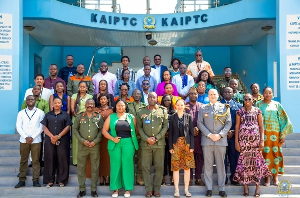
 Participants of humanitarian crises workshop
The growing complexity of humanitarian crises in West Africa requires stronger regional cooperation, practical preparedness, and inclusive approaches that bring together humanitarian, peacebuilding, and security actors.
This was the central message at the opening of the fifth phase of the Preparedness for Humanitarian Assistance and Peacebuilding in West Africa (HAWA) Core Course at the Kofi Annan International Peacekeeping Training Centre (KAIPTC).
Speaking at the opening ceremony, the Deputy Commandant of KAIPTC, Brigadier General Zibrim Bawah Ayorrogo, said humanitarian emergencies across the region are becoming increasingly interconnected, driven by violent extremism, displacement, climate change, environmental degradation, food insecurity, and governance challenges.
He noted that these overlapping crises cannot be addressed through technical expertise alone but require coordinated action involving governments, security institutions, civil society, humanitarian organisations, and development partners.
"The humanitarian and security landscape continues to grow more complex. Crises do not stop at national boundaries, and neither should our responses," he said.
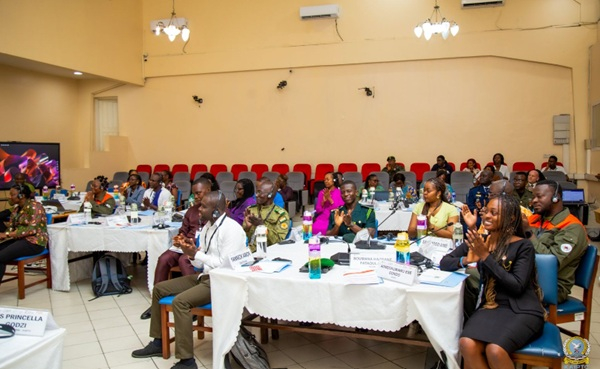
Brigadier General Ayorrogo observed that border communities across West Africa, particularly those along the Ghana-Burkina Faso, Togo and Côte d'Ivoire frontiers, continue to experience the combined effects of insecurity, climate stress and humanitarian pressures, underscoring the need for integrated regional responses.
He encouraged participants to use the course as an opportunity to develop practical solutions through scenario-based exercises, discussions and collaboration, stressing that the value of the programme would ultimately depend on how participants applied the knowledge within their own institutions and communities.
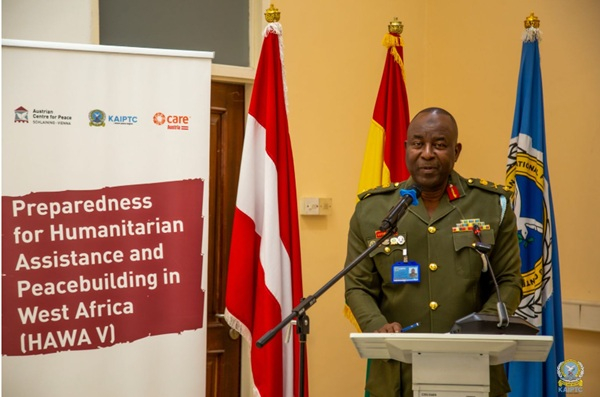
The Deputy Commandant also highlighted the importance of ensuring that women and young professionals play a meaningful role in humanitarian response and peacebuilding processes, describing inclusive participation as essential to achieving sustainable peace and effective humanitarian action.
Speaking on behalf of the Austrian Centre for Peace, HAWA Programme Manager, Sophia Stanger, said the humanitarian challenges confronting different parts of the world demonstrate the urgent need to strengthen disaster preparedness and resilience.
Drawing comparisons between recent extreme weather events in Europe and West Africa, she noted that while Austria had experienced record-breaking heatwaves, countries across West Africa had been affected by severe rains and flooding, resulting in the loss of lives, homes and livelihoods.
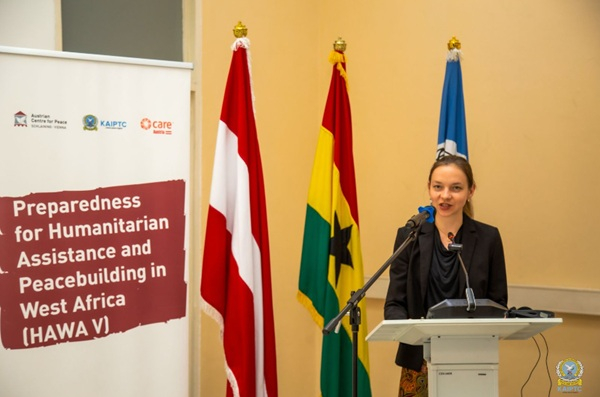
She said such events, once considered exceptional, are increasingly becoming the norm, making it imperative for humanitarian practitioners to integrate climate and environmental considerations into preparedness and response efforts.
"The reality of the climate crisis means that extreme weather events are becoming more frequent. We must be prepared to respond, even when the circumstances are difficult and unpredictable," she said.
Stanger described HAWA as more than a training programme, noting that it provides a long-term platform for cooperation among humanitarian actors, peacebuilders, civil society organisations and security institutions working to improve crisis response across West Africa.
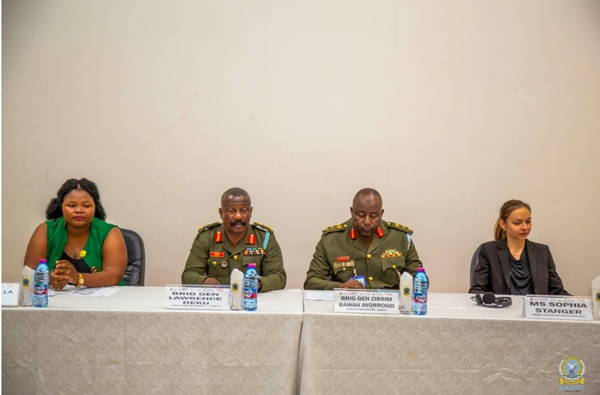
The HAWA Core Course brings together participants from across the continent and beyond to strengthen practical skills in humanitarian assistance, crisis response and peacebuilding through interactive learning, operational simulations and knowledge exchange.
It is implemented jointly by the Austrian Centre for Peace, CARE International, and KAIPTC, with support from the Austrian Development Agency and the Austrian Federal Ministry of Defence.
Both speakers agreed that as humanitarian emergencies become increasingly complex and transnational, sustained partnerships, inclusive leadership and practical capacity building will remain critical to strengthening resilience and improving preparedness across West Africa.

Copyright © 1994 - 2026 GhanaWeb. All rights reserved.










