



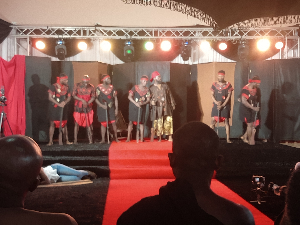
 Akuapem commemorates 200th anniversary of Odwira Festival
The people of Akuapem in the Eastern Region are commemorating the 200th anniversary of the Odwira Festival with historical enactments and a public lecture series aimed at preserving and promoting their rich cultural heritage while fostering unity among future generations.
The event, attended by the Akuapem Paramount Chief, Oseadeeyo Kwasi Akuffo III, brought together traditional leaders, historians, cultural enthusiasts and residents to reflect on the origins and significance of the Odwira Festival and the historic Akatamanso War of 1826.
Delivering a historical lecture, Rev. Dr Alfred Kwarteng traced the origins of the name Kyerepong, noting that it has been extensively documented by scholars, missionaries and linguists, including Rev. J.G. Christaller, Mohr and Rev. David Asante.
According to him, these scholars established that Kyerepong belongs to the Guan language group and that the Guan people were not confined to Akuapem alone.
They also identified Guan-speaking communities in Anum and its surrounding areas, Kete Krachi and as far as Salaga.
He explained that Kyerepong represents both a language and an important cultural heritage of the Guan people, including communities within the Nifa Division of the Akuapem Traditional Area.
This aspect of the lecture focused on the heritage of the people hosting the third Odwira Historical Enactment and Lecture Series as part of the bicentenary celebrations.
Rev. Dr Kwarteng explained that, as reiterated throughout the lecture and enactment series, the Akatamanso War was fought on August 7, 1826, when a coalition of Akuapem, Ga, Fante, Akwamu, Krobo, Shai, British, Danish and Dutch forces defeated the Asante army, bringing an end to years of domination and conflict in the southeastern states.
He further explained that the Akatamanso War did not occur in isolation but followed the Nsamankow War, during which British Governor Sir Charles MacCarthy and allied Fante forces were defeated by the Asante army, with MacCarthy losing his life in battle.
Following that victory, the Asantes sought to punish neighbouring states, including Ga, Akyem and Akuapem, for supporting their enemies — a development that ultimately led to the Akatamanso War.
According to Rev. Dr Kwarteng, the victory marked a turning point in the history of the Gold Coast states and laid the foundation for the annual Odwira celebration.
"The Akatamanso War was a struggle for freedom, justice and liberation from Asante supremacy. The victory brought peace to the southern states and gave the people of Akuapem a renewed sense of identity, unity and independence," he said.
The historian noted that following the victory at Akatamanso, the people of Akuapem acquired war deities and regalia, giving rise to the tradition of celebrating Odwira.
Okuapeman celebrated its first Adaebutuw on September 26, 1826, before observing the first Odwira Festival from October 16 to October 20, 1826.
He further explained that the word Odwira is derived from an Akan word meaning "purification", emphasising that the festival remains a period for spiritual cleansing, thanksgiving and reconciliation.
"Odwira is a celebration of purification. It is a time when traditional leaders cleanse the stools, honour the ancestors, give thanks for blessings received, and pray for good health, longevity and prosperity for the people," he said.
Rev. Dr Kwarteng added that the festival also serves as a platform for family reunions, community bonding and the settlement of disputes.
The lecture further highlighted the strategic role played by the Nifa Division during the war. Led by Nana Otutu Ababio II, the division commanded the right wing of the allied forces.
It contributed significantly through acts of bravery, the distribution of weapons and its expertise in treating wounded fighters during battle.
According to the historian, the Nifa Division had specialised war groups, including the Asonko and Apagya Asafo groups. These groups, together with warriors from the other Akuapem divisions, demonstrated exceptional bravery and commitment throughout the campaign.
Rev. Dr Kwarteng also shed light on the spiritual dimensions of warfare in Akuapem society, noting that warriors sought protection through deities from Adukrom, Apirede, Abiriw, Dawu, Awukugwa and Abonse before going into battle.
"For our ancestors, warfare was never merely physical. It was spiritual, political and cosmological. Victory depended not only on military strength or weapons but also on spiritual preparedness," he noted.
Addressing participants, Osuodumgya Otutu Ababio, the Adukromhene and Akuapem Nifahene, called on the people of Akuapem to actively participate in the Awukudae celebrations and support traditional leadership to promote peace and development.
He expressed concern over tensions surrounding stool land disputes in Akuapem and urged residents to rally behind their chiefs instead of undermining traditional authority.
"Let us all participate in Awukudae. People are creating tension in Akuapem over stool lands. Let us support our chiefs and traditional activities to facilitate development in our area instead of pulling them down," he appealed.
The Akuapem Nifahene said the reign of Oseadeeyo Kwasi Akuffo III had brought significant development to Akuapem through peace and unity, stressing that all traditional divisions share a common identity.
He appealed to the Nifa, Benkum, Gyase, Kronti and Adonten divisions to unite behind the Paramount Chief, whom he described as the leader of Akuapem.
According to him, peace, harmony and unity remain essential ingredients for attracting investment and accelerating development across the traditional area.
"Akuapem is about 300 years old. We are one people. Let us unite behind our Paramount Chief because he is our leader. Peace will ensure that investment and development come to Akuapem. Where there are issues we do not understand, let us seek answers instead of being confrontational. Let us be courageous like our forefathers," he urged.
As Akuapem celebrates two centuries of Odwira, traditional authorities say the anniversary serves as a reminder of the sacrifices made by their forebears and the need to preserve the cultural values, history and traditions that continue to define the identity of the Akuapem people.
The year-long commemoration is expected to feature cultural exhibitions, educational programmes, traditional performances and heritage activities designed to strengthen cultural awareness among the youth while showcasing Ghana’s rich cultural heritage to the world.

Copyright © 1994 - 2026 GhanaWeb. All rights reserved.










