



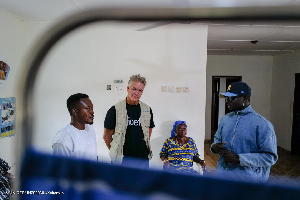
 Kuami Eugene joins UNICEF, Births and Deaths Registry to promote birth registration for children
UNICEF Ghana, in partnership with the Births and Deaths Registry, has renewed calls for parents and caregivers to register every child within the first year of life, as persistent barriers continue to leave thousands of children without a legal identity.
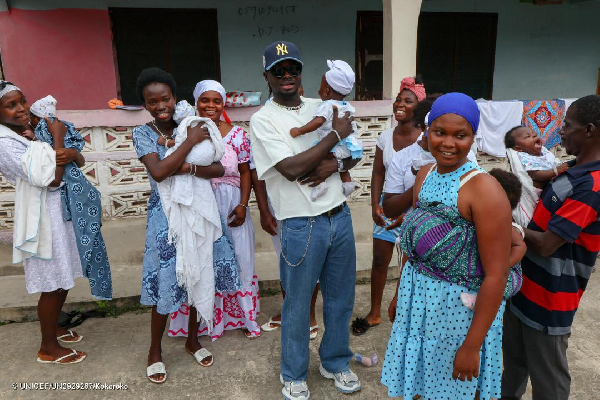
The call was made during a Birth Registration Month visit to Bepoase in Ghana’s Eastern Region, where UNICEF Ghana, the Births and Deaths Registry and Afrobeats artiste Kuami Eugene engaged families, community leaders and frontline registration officials.
The visit, led by UNICEF Representative in Ghana Andy Brooks, sought to spotlight recent gains in birth registration while drawing attention to the challenges that continue to prevent some children, particularly those in rural and hard-to-reach communities, from being registered.
Kuami Eugene joined the UNICEF and Births and Deaths Registry teams to encourage parents and caregivers to prioritise birth registration and ensure that every child has an official legal identity.
Why birth registration matters
A birth certificate serves as a child’s first official proof of identity. It can help children access essential services such as healthcare, education and social protection.
As children grow older, proof of birth may also be required to obtain a passport or national identification. Accurate birth registration data further enables authorities to better plan and deliver public services in communities where they are most needed.
Ghana has made progress in expanding birth registration, but coverage remains uneven across the country.
By the end of 2025, 588,972 births had been registered, representing 73.4 per cent of the expected total. In the Eastern Region, coverage increased from about 60 per cent in 2024 to 65 per cent in 2025. Despite the improvement, the region remained among the lowest-performing regions in the country.
The Bepoase visit therefore sought to draw national attention to these gaps and reinforce the need to make registration services more accessible, particularly for families living in rural and hard-to-reach areas.
Barriers to birth registration
UNICEF Ghana identified several challenges that continue to prevent families from registering their children.
One major barrier is distance and limited access to registration services. Registration offices and outreach services may be located far from rural, remote and island communities. Poor roads, seasonal inaccessibility and limited transportation can make the process difficult and costly for families.
Resource constraints also affect registration efforts. Limited staffing, transportation, information and communications technology equipment, as well as a shortage of community-level registration points, can restrict outreach and service delivery.
Risks for unregistered children
Children who are not registered at birth may face difficulties proving their legal identity. Without official documentation, it can be challenging to establish their name, age, place of birth, nationality and family relationships.
The absence of proof of birth can also create barriers to accessing essential services and protection, including education, healthcare, social protection, passports and national identification.
UNICEF Ghana and the Births and Deaths Registry are therefore urging parents, caregivers and communities to ensure that every child is registered, stressing the importance of securing a legal identity for every child from the earliest stage of life.

Copyright © 1994 - 2026 GhanaWeb. All rights reserved.










