



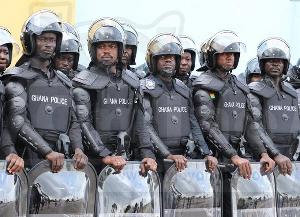
 File photo of police officers
A coalition of civil society organisations has called on the Ghana Police Service to urgently investigate alleged cases of intimidation, threats and destruction of farmlands in communities affected by illegal small-scale mining, popularly known as galamsey.
The organisations, including A Rocha Ghana, the Nature and Development Foundation, WACAM, and the Network of Legal Advocates for Land and Human Rights, say farmers and families in mining-affected areas are increasingly being exposed to threats and coercion by alleged illegal mining operators.
In a joint statement, the groups said some farmers had reported that their farms were being cleared and entered without their consent, while others were allegedly being forced from lands on which they depend for their livelihoods.
They warned that Ghana's fight against illegal mining could be undermined if residents in affected communities lose confidence in the ability of state institutions to protect them.
The call follows a formal criminal complaint submitted to the District Police Commander in Konongo on September 29, 2026, concerning an alleged incident at Patriensa in the Ashanti Region.
The complaint was prompted by a video circulating on social media which appears to show a 61-year-old cocoa farmer being chased from her farm by a man carrying a cutlass.
According to the organisations, the video was recorded by the farmer's son, who was present during the incident.
The groups said their investigations indicated that the farmer's son had gone to the farm after learning that a group of people had allegedly entered the property and commenced mining without his mother's knowledge or consent.
They further alleged that parts of the cocoa farm had already been cleared and destroyed.
The organisations said the group allegedly refused to identify who had authorised the mining activities or produce any licence, permit or approval, before becoming aggressive and confronting the farmer and her son with cutlasses.
The organisations stressed that the allegations must be investigated by the police and that it was ultimately for the police and prosecutorial authorities to determine whether any offences had been committed.
The civil society organisations say the Patriensa incident reflects what they describe as a wider pattern of intimidation in mining-affected communities across Ghana.
They said their work in affected communities had uncovered accounts of farmers allegedly losing farms, water sources being polluted and residents living in fear of armed groups operating on or near their lands.
According to the groups, a recurring pattern involves alleged unauthorised entry onto farmland, destruction of crops, threats against residents and the subsequent displacement of farmers who attempt to resist mining activities.
They also expressed concern that many affected residents do not report such incidents because of fears of retaliation or doubts that their complaints will receive a meaningful response.
The groups warned that the apparent underreporting of threats and intimidation could allow such conduct to continue unchecked.
They further said the destruction of cocoa farms could have serious implications for Ghana's agricultural livelihoods and national cocoa production.
The organisations have asked the Ghana Police Service to conduct a prompt, thorough and impartial investigation into the Patriensa incident.
They also want immediate protection for the farmer, her son and anyone assisting the investigation against possible harassment, intimidation or retaliation.
The groups are further calling for authorities to identify and lawfully secure any excavators, mining equipment, vehicles, weapons or minerals allegedly connected to the incident and prevent further mining or destruction of crops at the site.
They want the police to establish accessible and safe mechanisms through which farmers and residents of galamsey-affected communities can report threats, trespass and destruction of property.
The coalition is also urging the Police Service to provide a public update on the investigation, while protecting the safety and privacy of those involved.
In addition, the organisations are calling for the establishment of a simplified and anonymous complaints and remedy system to enable residents in mining-affected communities to report abuses without fear of retaliation.
The groups said the Patriensa case should not be treated solely as an isolated dispute between individuals, arguing that it raises broader concerns about community safety, agricultural livelihoods, environmental protection and respect for the rule of law.
They said a proper investigation could help establish whether the incident forms part of a wider pattern of alleged unlawful mining and intimidation in the area.
The organisations also urged the media, civil society and development partners to maintain public attention on the case and the safety of farming communities in Ghana's mining-affected areas.
They pledged to continue monitoring the Patriensa case, supporting affected communities in seeking protection and redress, and engaging the Police Service and other state institutions until the matter is resolved.

Copyright © 1994 - 2026 GhanaWeb. All rights reserved.










