



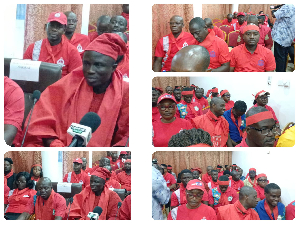
 TUTAG, GNAT and NAGRAT members held a press conference in Kumasi
The Ashanti Regional Secretariats of GNAT, NAGRAT and PRETAG have reaffirmed their support for the nationwide teachers’ strike, saying members will not return to the classroom until their concerns are satisfactorily addressed.
Speaking at a joint press conference in Kumasi on Tuesday, October 6, 2026, GNAT Ashanti Regional Secretary Daniel Kwaku Atakora said the unions would follow the directives of their national leadership.
He added that teachers in the region would not accept further assurances in place of concrete action.
The unions have given the government until October 16, 2026, to provide verifiable evidence that outstanding promotion-related salary arrears have been paid.
The group outlined three principal concerns and they include: Promotion placements and arrears: The unions want teachers who passed the December 2025 and February 2026 promotion examinations placed on the appropriate salary grades, with arrears paid from January 2026.
Two, a new collective agreement: They are seeking a clear, time-bound plan to conclude negotiations on a replacement for the expired agreement.
Thirdly, they also talked about the deprived-area allowance. With this, the group said, they want specific arrangements and a timetable for implementing the allowance for teachers serving in rural and underserved communities.
The unions said the strike, which began on September 25, 2026, followed missed deadlines and commitments they say have not been fulfilled.
Atakora also raised concerns about excessive workloads, repetitive administrative reporting and the wellbeing of teachers. He asked: “Is it a crime to be a teacher in Ghana?”
The unions are calling on the Ghana Education Service to review teachers’ workloads, remove unnecessary reporting requirements and provide confidential counselling and referral services for staff experiencing distress.
“Accountability must be matched by reasonable workloads, adequate resources, timely remuneration and respectful treatment,” Atakora said.
The unions acknowledged the disruption the strike is causing learners and families but maintained that their demand for fair treatment is tied to their commitment to quality education.
They said members would continue to support the industrial action until their concerns were addressed and their national leadership issued further directives.
Inside Ghana’s Abandoned Engineering Powerhouse: What Went Wrong?

Copyright © 1994 - 2026 GhanaWeb. All rights reserved.










