


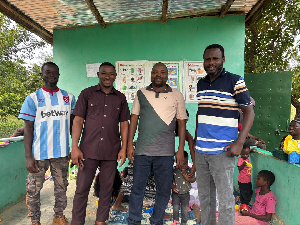
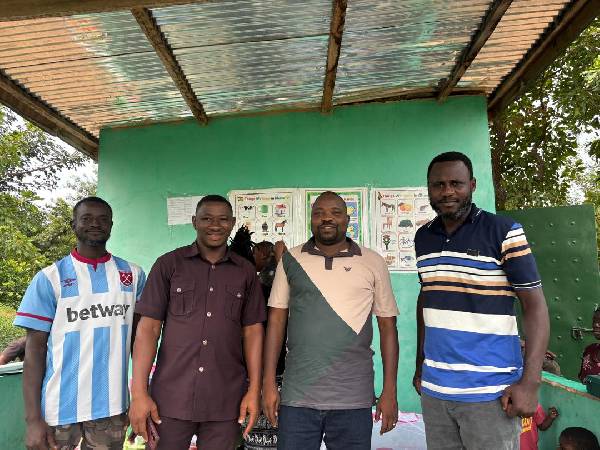
 Some of the stakeholders at the event
The Labor-Intensive Public Works (LIPW) program under the Ghana Productive Safety Net Project 2 (GPSNP2) of the Ministry of Local Government, Chieftaincy and Religious Affairs (MLGCRA), includes on-site childcare services aimed at enabling beneficiaries with young children, particularly women, to participate more effectively in public works activities.
In an effort to strengthen the quality of childcare provision under the programme, MLGCRA with support from the Early Learning Partnership Trust Fund through the World Bank has piloted the introduction of early childhood development learning and standards.
The initiative, undertaken with technical support from MDF West Africa and the Early Childhood Development and Care Unit of the Department of Children, involved the development of childcare arrangements, training of project and District Assembly personnel, caregivers and other community actors across participating Zones, provision of teaching and learning materials as well as the enhanced childcare support at selected LIPW sites.
The National Engineer, Adwoa Boakyewaa Asotia-Boakye highlighted the importance of integrating childcare arrangements into the planning and implementation of public works. She noted that such support helps address practical barriers to women's participation while promoting safer and more inclusive worksites.
Beneficiaries at the LIPW sites have expressed their appreciation for the enhanced childcare support and feedback gathered during the process evaluation highlighted the importance of having childcare support close to work locations, particularly in helping mothers balance their caregiving responsibilities with participation in public works.
The Zonal Teams also shared implementation experiences, including lessons on caregiver training, community involvement, monitoring and supervision and the need to extend the ECD learning to all ongoing LIPW sites.
According to the National Coordinator, Prof. Prosper B. Laari, “The pilot has reinforced the importance of addressing childcare responsibilities as part of efforts to promote meaningful participation by women in public works.”
Supported by research, monitoring, and process evaluation, the pilot has generated valuable insights into the practical implementation of childcare support within public works programmes.
These lessons will inform efforts to strengthen gender-responsive and inclusive social protection interventions, with important implications for the design and implementation of future public works programmes in Ghana.

Copyright © 1994 - 2026 GhanaWeb. All rights reserved.










