


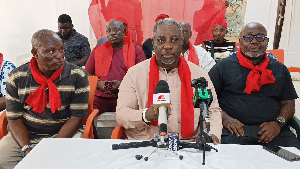
 Some of the stakeholders at the event
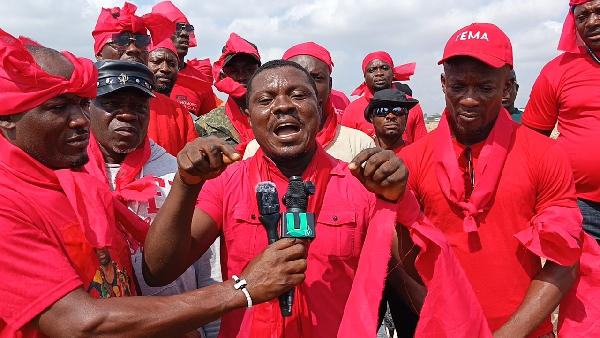
Some youth in Tema and traditional leaders of Nungua are calling on the Inspector-General of Police (IGP) and other security agencies to intervene and halt the maiden Dzenten Festival, scheduled for November 1 at Sakumono and Nungua in the Greater Accra Region.
The groups argue that the festival, being organised by Accra Metropolitan University, could distort the area's traditional history and misrepresent aspects of its cultural and spiritual heritage.
The festival draws inspiration from the cultural and spiritual significance of Angmu Te, also known as the Sacred Meridian Rock. Dzenten is a Ga expression meaning "Centre of the World."
Speaking at a press conference, the Tema youth expressed concern that the narrative surrounding the festival does not accurately reflect their understanding of the area's history and cultural heritage.
They are therefore appealing to the IGP and other relevant security agencies to intervene and prevent the festival from taking place.
Meanwhile, traditional leaders of Nungua have also raised concerns about the organisation of the festival, particularly the role of the chief priest responsible for offering prayers at the Sacred Meridian Rock, known as Angmu Te.
According to the leaders, the organisers have sidelined the rightful chief priest, a move they believe undermines traditional authority and disregards the spiritual significance of the sacred site.
They are consequently calling on the appropriate authorities to intervene and suspend the festival, warning of possible repercussions if their concerns are not addressed.
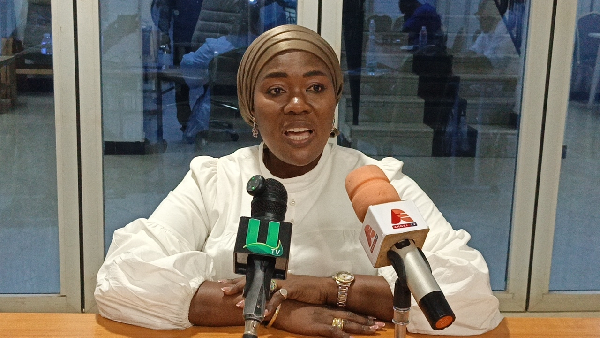
In response to the concerns, the Vice-Chancellor of Accra Metropolitan University, Professor Goski Alabi, said the university had held extensive consultations with traditional leaders of Nungua and had formally written to the Tema Traditional Council regarding the festival.
She expressed surprise at the concerns raised by the groups, explaining that the university had already taken steps to engage the relevant traditional authorities ahead of the event.
Professor Alabi, however, emphasised that the university remained open to further dialogue with both parties to clarify any misunderstandings and address their concerns.

Copyright © 1994 - 2026 GhanaWeb. All rights reserved.










