


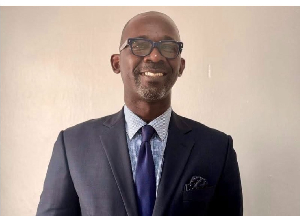
 Broadcast journalist Kojo Marfo
Senior Broadcast Journalist Kojo Marfo has raised concerns over what he describes as growing internal divisions within the New Patriotic Party (NPP) in the Ashanti Region, warning that the party risks undermining its strongest electoral base through personal rivalries, factional interests and the pursuit of political influence.
Drawing on the popular expression, “When two elephants fight, it is the grass that suffers,” Marfo argued that ordinary party supporters and grassroots members in the Ashanti Region could ultimately bear the consequences of growing tensions among influential party figures.
According to him, what appears to be a disagreement over the administration and appointments made by the Ashanti Regional Chairman, Odeneho Kwaku Appiah, popularly known as COKA, reflects a deeper struggle over political control, influence and the future direction of the party in the region.
He suggested that the unfolding situation is also being influenced by calculations surrounding the selection of a running mate for the party’s flagbearer, Dr Mahamudu Bawumia, ahead of the 2028 general elections, with different political interests seeking to position themselves strategically within the party.
Marfo further alleged that individuals perceived to be opposed to COKA’s leadership and appointments are affiliated with Dr Ayew Afriyie, whom he suggested is positioning himself for consideration as Bawumia’s running mate.
These developments, he argued, raise questions about whether the party’s regional organisational structures are being allowed to function independently or are increasingly becoming arenas for competing national political ambitions.
His concerns come amid an ongoing disagreement over appointments made by the Ashanti Regional Chairman. A group of elected regional executives has reportedly petitioned the NPP’s national leadership, seeking the cancellation of four appointments over alleged breaches of the party’s internal procedures and guidelines.
The petitioners are seeking the intervention of the party’s national leadership to ensure that the appointment process is reconsidered and conducted in accordance with established party procedures.
For Marfo, however, the bigger concern is what these disagreements could mean for the NPP’s electoral fortunes, particularly in a region that has historically constituted the backbone of its presidential electoral support.
He questioned why influential party figures would allow internal disagreements to escalate to a point where the very structures responsible for mobilising supporters and securing electoral victories could become weakened.
He also challenged the party’s national leadership, particularly Dr Bawumia and the Chief of Staff, Hon. Osei-Kyei-Mensah-Bonsu, to demonstrate stronger leadership and intervene decisively to prevent the situation from deteriorating further.
“Why is Dr Bawumia failing to crack the whip and stamp his authority? Why is the Chief of Staff failing to crack the whip?” he questioned.
Marfo further raised concerns about the credibility and standing of the Minority Leader, arguing that the party must be mindful of public perceptions surrounding its leading figures, particularly where unresolved legal matters and court processes are concerned.
He maintained that the NPP cannot afford to allow personal interests and internal political calculations to take precedence over the collective responsibility of rebuilding the party.
The journalist also posed a fundamental question about the consequences of the unfolding situation: if COKA is unable to deliver the Ashanti Region for the NPP in 2028 because of internal resistance and factional divisions, who ultimately bears the responsibility?
He argued that the consequences would extend beyond the regional chairman and the personalities involved in the disagreements, affecting parliamentary candidates, constituency executives, polling station organisers and ordinary supporters who depend on a united party structure to advance their political interests.
The Ashanti Region remains particularly strategic to the NPP’s electoral calculations. Following the party’s defeat in the 2024 general elections, its ability to reorganise, consolidate its support base and restore confidence among traditional supporters will be critical to its ambition of returning to power in 2028.
COKA, who was elected regional chairman in August 2026, secured 658 votes to defeat his challenger, Dr Henry Kwabena Kokofu, who obtained 269 votes. His election was expected to usher in a new phase of mobilisation and organisational rebuilding in the region.
COKA has previously called on party members to put aside individual interests and unite behind the broader objective of rebuilding the NPP.
Marfo believes such calls must translate into practical action, warning that the party cannot afford to sacrifice its electoral prospects on the altar of personal ambition and internal power struggles.
He cautioned that slogans and campaign expressions, including the party’s familiar “Kukurudu” chant, would not be sufficient to rescue the NPP if its internal divisions remained unresolved.
For him, the party has considerable work to do in the Ashanti Region, and that work must begin with discipline, reconciliation, respect for party structures and a willingness among influential figures to subordinate personal ambitions to the collective interest.
“Why would the NPP want to destroy the Ashanti Region, which is its bargaining chip?” he questioned.
He warned that if the party’s leading figures continued on this path, the consequences could be far more damaging than the immediate disagreements suggest.
“Time will always tell a story,” Marfo concluded.

Copyright © 1994 - 2026 GhanaWeb. All rights reserved.










