


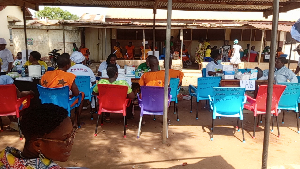
 The Shai Osudoku District Hospital extended medical screening services to inmates of the Akuse Priso
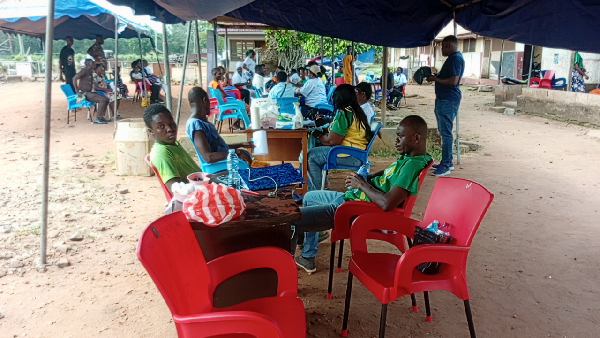
Inmates of the Akuse Prisons in the Eastern Region have benefited from a comprehensive medical screening exercise organised by the Shai Osudoku District Hospital at Dodowa in the Greater Accra Region, bringing essential healthcare services closer to a population with limited access to conventional medical facilities.
The exercise, which involved about 40 health professionals and other hospital staff, provided inmates and prison officers with access to general medical consultations, dental care, ear, nose and throat (ENT) services, eye screening, mental health assessments and laboratory investigations.
The hospital team also donated assorted items, including food, clothing, footwear, toiletries, detergents, medication and books to support the welfare of the inmates.
Speaking during the exercise, the Acting Medical Superintendent of the Shai Osudoku District Hospital, Dr Alexander Agyei, said the initiative formed part of the hospital's commitment to extending healthcare services beyond its immediate operational area and giving back to society.
He explained that although the hospital had been in existence for more than 50 years, it moved into its current facility in 2016 following the construction and handover of a new government-funded facility.
According to him, the hospital had undertaken several activities to commemorate its 10th anniversary at the facility, including a float, community-based clinical engagements and a praise and worship programme involving churches and religious leaders in the Shai Osudoku District.
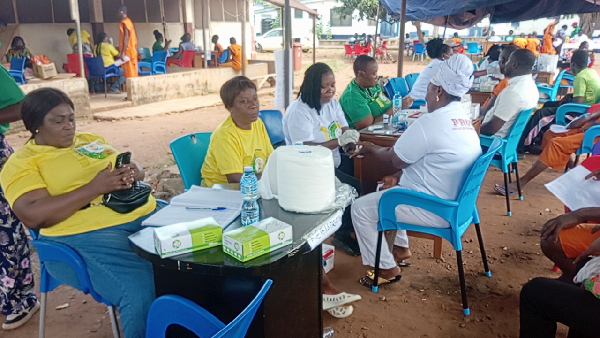
He said the decision to extend the anniversary activities to the Akuse Prisons was informed by the need to address the healthcare needs of inmates, whose circumstances often limit their access to medical services.
"Those of us outside the prison can walk into a health facility whenever we have a health concern, but our brothers and sisters in prison do not have that same privilege," he said.
Dr Agyei noted that although the prison facility had an infirmary, its capacity to provide certain specialised healthcare services was limited, making the hospital's intervention necessary.
He said the medical outreach was also intended to identify inmates requiring further medical attention and facilitate referrals to appropriate health facilities.
He disclosed that the initiative was the hospital's first medical outreach at the Akuse Prisons but expressed optimism that it would become an annual programme following the enthusiasm demonstrated by staff.
The Acting Medical Superintendent acknowledged the support of partner organisations and individuals, particularly the Lions Club, which donated spectacles for inmates with visual challenges, as well as other contributors who provided financial assistance towards the exercise.
Meanwhile, a Specialist in Community Mental Health and Rehabilitation, Gloria Sarkodie Addo, called for increased attention to the mental health and psychological well-being of inmates.
She noted that incarceration often disrupts family relationships, employment and social connections, potentially exposing inmates to psychological challenges such as depression, anxiety, panic attacks and stress-related conditions.
According to her, social stigma and negative perceptions towards incarcerated persons could further worsen their mental health, stressing the need for society to treat inmates with dignity and compassion.
"Regardless of what they may have done, they come from families. We should show them love, care and give them the necessary attention," she said.
Sarkodie Addo urged prison officers to observe inmates for unusual behavioural changes and other symptoms of mental health conditions and ensure that those identified were referred promptly for professional assessment and treatment.
She disclosed that the hospital's mental health team had encountered cases of depression, anxiety and other stress-related conditions among inmates, although a comprehensive assessment would be required to establish the specific conditions identified during the screening.
She added that inmates requiring further intervention would receive follow-up assessments, medication where necessary and psychotherapy.
Where physical follow-up consultations proved difficult, she said, the team would explore virtual arrangements to ensure continuity of care.
Sarkodie Addo further indicated that some inmates could experience symptoms associated with post-traumatic stress disorder (PTSD), including recurring distressing memories and flashbacks relating to past experiences.
She emphasised the importance of sustained mental health support for inmates, noting that their loss of freedom should not translate into the denial of their right to healthcare and humane treatment.

Copyright © 1994 - 2026 GhanaWeb. All rights reserved.










