


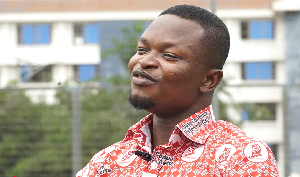
 President of the National Union of Ghana Students (NUGS), Rashid Ibrahim
, has called for greater opportunities for young people to participate in national development, arguing that they have the potential to contribute meaningfully to addressing challenges confronting the country.
He said young people had demonstrated their ability to deliver results and should be given the necessary support and opportunities to take up leadership positions and influence decisions that affect their future.
“The youthful leaders are doing well. Why don’t we give them the opportunity?” he asked.
Speaking in the documentary We Shall Lead: Voices Shaping the Future of Africa, Ibrahim said providing young people with the right opportunities would enable them to contribute significantly to national development.
Meet the media personalities who have declared parliamentary ambitions ahead of 2028
His remarks come amid growing concerns about youth unemployment and the difficulties young people face in accessing opportunities to realise their potential.
Also featured in the documentary, Chief Executive Officer of the Ghana Chamber of Young Entrepreneurs and President of the Ghana Youth Federation, Sherif Ghali, expressed concern about the limited involvement of young people in political decision-making.
According to him, although efforts were being made to include young people in leadership structures, many continued to be excluded from decisions that directly affected their lives and the country's development.
“The struggle is so serious that young people do not want to go into politics. It is not about including us but allowing us to take decisions,” he stated.
Ghali's concerns highlight the importance of giving young people a meaningful role in shaping policies and interventions that affect their economic and social prospects.
The documentary also features the Vice President of the Student Representative Council (SRC) of the Ghana School of Law, Hariratah Ibrahim Doudu, who highlighted the barriers women face in pursuing leadership positions.
She recounted how growing up in a family of 24 siblings and losing her father shortly before completing senior high school strengthened her determination to pursue leadership.
Doudu also revealed that no woman had attempted to contest the vice presidency of the Ghana School of Law SRC for more than five years, despite women outnumbering men at the institution.
Her experience highlights how structural and social barriers can limit access to opportunities, particularly for young women.
The documentary, which features seven individuals from Ghana, Kenya and Uganda, explores the experiences of young people and women seeking to participate in politics, governance and leadership.
It forms part of the European Union Women and Youth Democratic Engagement (WYDE) Political Parties Project, which seeks to strengthen democratic governance and promote the participation of women and young people in political processes.
The project was funded by the European Union, led by the European Network of Political Foundations (ENoP) and implemented in Ghana by the Konrad-Adenauer-Stiftung (KAS) Ghana Office.
Through their experiences, the participants make a strong case for greater inclusion of young people in leadership and decision-making, highlighting the need to move beyond simply recognising their potential to giving them practical opportunities to contribute to national development.
AM
Samira Bawumia Stuns Audience with ‘Asaase Yaa’ Poem at Literary Night

Copyright © 1994 - 2026 GhanaWeb. All rights reserved.










