



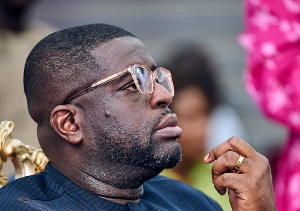
 Pastor Selasie Addae is president and founder of Apostolic Empowerment Ministries
President and founder of Apostolic Empowerment Ministries, Pastor Selasie Addae, has pushed back against growing public perceptions that churches operate as profit-driven institutions, describing such views as unfair and rooted in misunderstanding.
Addressing the issue of church finances, Addae rejected claims that pastors enrich themselves at the expense of congregants, particularly narratives fuelled by social media comparisons of pastors’ past and present lifestyles.
“It’s very unfair,” he said, referring to the circulation of old photos used to suggest that pastors have accumulated wealth through church offerings.
In his interview with MzGee on Behind the Pulpit, he explained that such portrayals ignore both personal growth and the realities of ministry over time.
“When you look at your picture from 10 or 15 years ago, you’ve changed,” he said, adding that in his earlier years, intense fasting and the demands of ministry also affected his physical appearance.
For Addae, the work of a pastor is often misunderstood and undervalued.
“No pastor is perfect, but for what pastors do, they deserve honour,” he stated, comparing the role to professions like healthcare, where the focus is often on shortcomings rather than sacrifice.
He also addressed the broader question of whether church money “feeds pastors”, referencing biblical teachings to explain the relationship between spiritual leadership and material support.
“If we have invested spiritual things in you, is it wrong that we reap your material things?” he quoted, while emphasising that this should not be abused.
“I will not come and tell you to give me money to buy a car,” he added, noting that different ministers operate with different approaches.
Addae further cautioned against underestimating congregations, describing churches as communities made up of informed individuals from diverse professional backgrounds.
“A church is made up of doctors, lawyers, market women, politicians—don’t underestimate their intelligence,” he said.
On the subject of the prophetic, he challenged the notion that the church has shifted entirely into a “prophetic era”, insisting instead on the need for balance.
“Every church must be balanced,” he said, pointing to the fivefold ministry—apostles, prophets, pastors, teachers and evangelists—as essential to healthy church growth.
While acknowledging the prominence of prophecy in recent times, Addae explained that the prophetic goes beyond positive declarations.
“Prophecy can rebuke, correct and direct,” he said. “It’s not just about saying good things.”
He also highlighted the challenges of communicating prophetic messages in modern democratic societies, where multiple voices and interpretations can create confusion.
“When prophetic words come, there must be a way to communicate them so leadership can appreciate them,” he said.
For Addae, the solution lies in maturity, balance and responsibility—both in how churches operate internally and how they are perceived externally.
As conversations around religion, influence and accountability continue to evolve, his stance is clear: the church must remain grounded in purpose, not perception.

Copyright © 1994 - 2026 GhanaWeb. All rights reserved.










