



In an era where intense competition and orchestrated media scrutiny have forced many private corporate organisations out of business, KGL Group has emerged as a rare example of resilience, credibility, and sustained impact within Ghana’s corporate ecosystem.
Despite what supporters describe as “sponsored media attacks” by competitors and other interested parties, KGL Group has maintained focus on value creation, compliance, and corporate social responsibility. Its leadership insists that the company’s integrity, reputation, and selfless commitment to national development have neutralised attempts to derail its operations, allowing it to continue contributing meaningfully to Ghana’s economy.
Attorney-General Review of NLA–KGL Deal
The recent decision by the Board of the National Lottery Authority (NLA) to seek legal advice from the Attorney-General on the NLA–KGL licensing agreements has been described by industry observers as a standard governance practice.
The licensing arrangement, originally drafted and coordinated by a sub-committee of the NLA Board chaired by the Attorney-General’s representative, has undergone multiple reviews over the years. The provisional licence issued under the leadership of Board Chairman Togbe Francis Albert Seth Nyonyo and then Director-General Hon. Kofi Osei-Ameyaw was subsequently reviewed by another board under the same chairman but with Hon. Samuel Kwabena Awuku as Director-General.
A later reconstituted board chaired by Gary Nimako Marfo also reviewed the agreement in line with directives from the Attorney-General, all under the same government administration. Against this background, stakeholders argue that it is neither unusual nor extraordinary for the deal to undergo further review under a different government and a different Attorney-General.
As former President John Dramani Mahama once noted, “Review is not the same as cancellation.” Supporters of the partnership therefore question claims by investigative groups seeking credit for the current review, particularly as, to date, no specific breach or illegality in the agreement has been conclusively identified.
Redefining Ghana’s Lottery Industry Through Digital Innovation
KGL Group’s prominence is closely tied to its public-private partnership with the NLA, which began in 2019. Prior to this collaboration, several attempts by the NLA and private partners to operate digital 5/90 lottery platforms—between 2008 and 2019—were unsuccessful.
Through its subsidiary, KGL Technology, the Group undertook the digitisation of Ghana’s lottery operations, introducing robust USSD and online platforms that transformed a traditionally manual system into a modern, technology-driven enterprise. Proponents of the partnership credit this intervention with unlocking new efficiencies and revenue streams for the state.
Revenue Growth and Public Value Creation
Official figures indicate that since the inception of the partnership, digital lottery earnings for the NLA have increased by more than 100 per cent between 2019 and 2025. KGL’s contribution to the Consolidated Fund is channelled through multiple streams, including taxes paid to the Ghana Revenue Authority, statutory payments to the NLA, the National Communications Authority, the Gaming Commission, and licence fees to the Bank of Ghana.
Crucially, advocates of the model emphasise that the arrangement poses no financial risk to the NLA. The Authority has not committed public funds to the operation, while KGL bears all operational risks, liabilities, and technological costs associated with the digital lottery business. This structure has been cited as a textbook example of an effective public-private partnership.
Beyond Profit: Social Impact and Corporate Citizenship
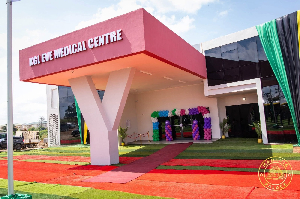
Beyond financial performance, KGL Group has gained recognition for extensive corporate social investment through the KGL Foundation. Among its flagship initiatives is a multi-million-dollar ultra-modern mental health facility under construction at the Kwame Nkrumah University of Science and Technology (KNUST) in Kumasi, in partnership with the Eve Medical Foundation. Phase One of the project was commissioned on December 9, 2025, by Vice-President Prof. Naana Jane Opoku-Agyemang and Her Royal Highness Lady Julia Osei Tutu II.
The Foundation also provides scholarships to orphans and underprivileged students, supplies medical incubators to hospitals nationwide, and supports education and health initiatives aimed at long-term national development.
In sports, KGL has made significant investments, including sponsorship of the Black Stars, support for grassroots football through a five-year agreement with the Ghana Football Association, and the organisation of youth competitions such as the KGL U-17 Champions League. These initiatives are positioned as tools for youth empowerment, talent development, and community engagement.
International Recognition and Leadership
KGL’s integrated approach to business and social responsibility has earned international recognition, including the Forbes Best of Africa Corporate Leadership and Innovation Award. Forbes has cited the Group and its Founder and Executive Chairman, Mr. Alex Apau Dadey, for ethical practices, sustainability, community involvement, and transparent governance.
Mr. Dadey’s repeated recognition as a top CEO and Entrepreneur of the Decade reflects what supporters describe as visionary leadership anchored in the belief that African-owned enterprises can compete globally while remaining rooted in local development.
Setting the Benchmark for Corporate Ghana
As Ghana continues to encourage indigenous businesses to scale up and compete with multinational firms, KGL Group’s trajectory is increasingly cited as a benchmark. Its blend of technological innovation, regulatory compliance, economic contribution, and social impact presents a case study in how homegrown enterprises can drive national development.
Supporters maintain that no amount of negative publicity can overshadow the Group’s achievements, expressing confidence that KGL will continue to expand and innovate into 2026 and beyond. In their view, supporting indigenous corporations is not merely a business choice but a collective civic responsibility essential to Ghana’s long-term economic transformation.
By Razak Kojo Opoku (PhD)
University Lecturer/Researcher & Former PR Manager of NLA



Copyright © 1994 - 2025 GhanaWeb. All rights reserved.










