


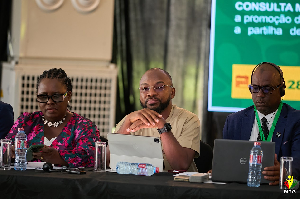
The Chief Executive Officer of the National Youth Authority (NYA), Osman Ayariga, has underscored the importance of youth empowerment programmes in preventing conflict, strengthening community resilience and promoting peace and security in Ghana.
Mr. Ayariga made the remarks at the ECOWAS Ministerial Consultation on Youth, Peace and Security in Accra, where he spoke on behalf of the Minister for Youth Development and Empowerment, Hon. George Opare Addo.
He explained that Ghana's interventions under the government's Resetting Agenda were contributing to the five pillars of the Youth, Peace and Security framework: Participation, Protection, Prevention, Partnerships, and Disengagement and Reintegration.
According to him, these pillars provide an important framework for connecting youth participation, economic empowerment, community safety and support for vulnerable young people.
Mr. Ayariga identified the National Youth Parliament, Ghana Youth Federation, and District and Regional Youth Committees as mechanisms intended to institutionalise youth participation in decision-making processes.
He also highlighted the National Apprenticeship Programme and Adwumawura initiative as interventions supporting skills development and economic opportunities for young people.
He further pointed to the Red Means Stop Campaign as part of efforts to address substance abuse, which he identified among the challenges affecting youth wellbeing and community security.
The CEO stressed that unemployment, exclusion, violence and substance abuse could undermine the contribution of young people to peacebuilding if not addressed through coordinated and practical interventions.
He noted that the National Action Plan on Youth, Peace and Security would help connect existing initiatives with stronger protection measures, strategic partnerships and pathways for vulnerable young people to rebuild their lives.
Mr. Ayariga emphasised that youth empowerment must extend beyond providing opportunities to participate in programmes. It must also ensure that young people have meaningful influence over decisions and access to the resources needed to improve their circumstances.
He called for greater attention to young women, young people with disabilities and those living in underserved communities, stressing that inclusive participation was essential to sustainable peace.
He also highlighted the role of civil society organisations, including the Ghana Civil Society Coalition on Youth, Peace and Security, in supporting the finalisation of the action plan, implementation and accountability.
Mr. Ayariga urged stakeholders to strengthen coordination between government institutions, local authorities, civil society and youth organisations to ensure that empowerment programmes respond to the realities facing young people.
He maintained that investments in skills, employment opportunities, participation and protection could help build more resilient communities and strengthen young people's contributions to national and regional peace.

Copyright © 1994 - 2026 GhanaWeb. All rights reserved.










