



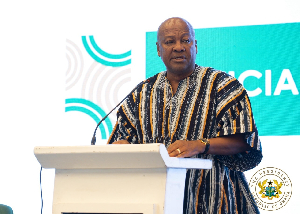
On the sidelines of the African Union (AU) Summit, former President of Ghana, John Dramani Mahama, delivered a compelling keynote address at the Alliance of African Multilateral Financial Institutions, calling for stronger and more resilient continental financial institutions to power Africa’s long-term economic transformation.
Speaking in his capacity as Champion of African Financial Institutions, President Mahama emphasized that Africa’s development agenda must be anchored on robust, well-capitalized, and efficiently governed financial institutions capable of mobilizing domestic resources and reducing reliance on external financing.
He noted that African multilateral financial institutions play a critical role in infrastructure development, industrialization, trade facilitation, and private sector growth. According to him, strengthening these institutions would enhance regional integration efforts under frameworks such as the African Continental Free Trade Area (AfCFTA) and accelerate sustainable development across the continent.
President Mahama stressed the importance of collaboration among governments, development finance institutions, and private investors to unlock Africa’s full economic potential. He urged member states to demonstrate political will by supporting policy reforms, improving regulatory environments, and ensuring transparency and accountability within financial systems.
He further highlighted the need for innovative financing mechanisms to address infrastructure deficits, climate change adaptation, food security challenges, and youth unemployment — issues he described as critical to Africa’s future stability and prosperity.
The Alliance of African Multilateral Financial Institutions meeting brought together leaders of regional development banks, policymakers, and financial experts to deliberate on strategies to enhance financial resilience and deepen intra-African investment.
President Mahama concluded by reaffirming his commitment to championing stronger continental institutions that can serve as engines of inclusive growth, reduce vulnerability to global economic shocks, and position Africa as a competitive force in the global economy.

Copyright © 1994 - 2026 GhanaWeb. All rights reserved.










