



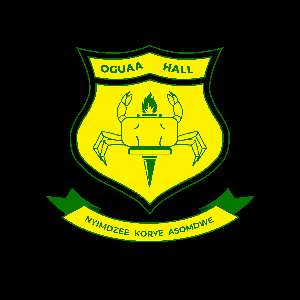
The University of Cape Coast, established in 1962, has long been recognized as one of Ghana’s leading institutions of higher learning. Founded initially to train graduate teachers for the country’s expanding educational system, the university gradually developed into a comprehensive academic institution. Central to this development was its residential system, particularly the traditional halls, which have played a crucial role in shaping student life and identity. Among these halls, Oguaa Hall holds a unique historical and cultural significance.
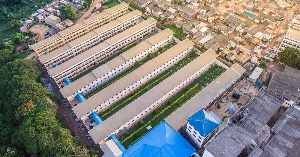
Oguaa Hall was established in 1967, during a period when the university was expanding both in student population and infrastructure. The need for accommodation had become pressing, and the creation of new halls was essential to support the growing academic community. The name “Oguaa” is derived from the indigenous Fante name for Cape Coast, the historic town in which the university is located. This naming was deliberate, reflecting a strong connection between the hall and the cultural heritage of the host community.
Cape Coast itself occupies an important place in Ghana’s history. As a former colonial capital and a center of early Western education in the country, it has long been associated with intellectual development and governance. By adopting the name “Oguaa,” the hall symbolically aligns itself with this legacy of learning, resilience, and cultural pride. It serves as a reminder that academic life within the university is deeply rooted in the broader historical context of the region.
From its inception, Oguaa Hall was designed as a mixed residential hall, accommodating both male and female students. This inclusivity distinguished it from some of the earlier halls and contributed to its reputation as a community-oriented space. Over the years, it has grown to become one of the largest halls within the university, known for its balanced environment that promotes both academic focus and social interaction.
The identity of Oguaa Hall is further reflected in its traditions and symbols. Residents are often referred to as “Gentlemen and Ladies of Oguaa,” a title that emphasizes dignity, unity, and mutual respect. The hall’s colors, green and yellow, represent growth, vitality, and optimism qualities that align closely with the aspirations of students pursuing higher education. These elements have helped to foster a strong sense of belonging among residents, making the hall not just a place of accommodation but a community with shared values and identity.
Historically, the hall has played an integral role in the social and intellectual life of the university. Like other traditional halls, Oguaa has served as a platform for leadership development, academic collaboration, and cultural expression. Students have engaged in debates, sports, and inter-hall competitions, all of which contribute to a vibrant campus culture. Through these activities, the hall has produced graduates who have gone on to contribute significantly to various sectors of Ghanaian society.
As the university expanded over the decades, Oguaa Hall also underwent transformations. Increasing student enrolment necessitated improvements in infrastructure and facilities. Efforts were made to upgrade accommodation, improve water supply, and enhance overall living conditions. Despite these changes, the hall has managed to preserve its historical identity and traditions, maintaining a balance between modernization and heritage.
In contemporary times, Oguaa Hall continues to be a cornerstone of student life at the University of Cape Coast. While it has faced occasional challenges, as is common in large residential communities, it remains a symbol of unity, discipline, and academic commitment. Generations of students have passed through its corridors, each contributing to its evolving story while upholding its core values.
Generally, Oguaa Hall represents more than just a residential facility within the University of Cape Coast. It is a historical institution that embodies the intersection of education, culture, and community. Rooted in the rich heritage of Cape Coast and shaped by decades of academic tradition, the hall stands as a testament to the enduring importance of residential life in higher education. Its legacy continues to inspire students, linking the past with the present and shaping the future of the university.

Copyright © 1994 - 2026 GhanaWeb. All rights reserved.










