



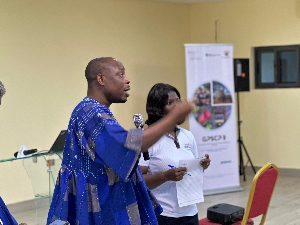
The President of the Oil Palm Development Association of Ghana (OPDAG), Mr. Paul Amaning, has issued a stern warning to illegal miners to desist from destroying oil palm farmlands in search of gold, describing the practice as “a direct attack on Ghana’s agricultural future.”
Delivering his remarks at OPDAG’s capacity-building workshop in Cape Coast, Mr. Amaning said the destruction of farms by galamsey had reached alarming levels, with entire plantations being uprooted to pave way for mining pits.
“Every palm tree cut down for galamsey is not just a tree lost – it is a farmer’s livelihood, a family’s income, and a community’s future destroyed. We cannot allow this to continue. I am calling on all illegal miners to stop immediately,” he warned.
Mr. Amaning stressed that OPDAG would not hesitate to enforce the provisions of the Tree Crop Development Authority (TCDA) Act 1010, 2019, which provides sanctions for individuals found destroying palm trees. He added that OPDAG was working closely with the TCDA to ensure strict application of the law.
He further acknowledged the efforts of the Chief Executive Officer of the TCDA, Dr. Andrew Okrah, whose tenure has been marked by strong collaboration with OPDAG to ensure compliance with regulations and protection of farmers’ interests.
The OPDAG President also appealed to chiefs and local authorities to be vigilant.
‘’We need our traditional leaders to stand firm. Too many concessions are being granted without considering the devastating effect on farmers who depend on palm cultivation,” he said.
The workshop, organized under the Private Sector Competitiveness Programme Phase II with support from Niras and Proforest, also discussed strategies to strengthen OPDAG’s institutional capacity. Participants emphasized that while gold mining may bring quick cash, oil palm provides sustainable income for generations, and its destruction poses long-term threats to national food and economic security.
In addition, the association raised concerns about the smuggling of foreign edible oils, describing it as another major challenge sabotaging the local oil palm and edible oil industry in Ghana. OPDAG called for stronger border controls and enforcement measures to protect local farmers and processors from unfair competition.
Story by: Citizen Kofi Owusu



Copyright © 1994 - 2026 GhanaWeb. All rights reserved.










