


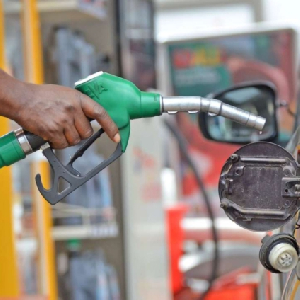
A new Middle East flare-up is testing Ghana’s fuel prices again. Social media is already doing what it does best: recycling blame and applause depending on which party is in power.
But here’s the honest question: `How much of the pump price is outside government control, how much is within it, and do we judge every government by the same standard?`
Yes, global conflict affects fuel. But fuel is not just for drivers. It shows up in trotro fares, market food, farm inputs, fishing, construction, electricity and supply chains. Even if you don’t own a car, you pay a “fuel tax” every day.
On 4 August 2026, Accra prices ranged from GH¢14.53 to GH¢16.29 per litre for petrol, averaging about GH¢15.05, and GH¢16.97 to GH¢19.49 for diesel, averaging about GH¢18.02. GOIL published petrol at GH¢15.99 and diesel at GH¢17.26.
PAGE 2: THE EVIDENCE ACROSS THREE SHOCKS
COVID-19, the Russia–Ukraine war and the 2026 US–Israel–Iran episode all pushed global oil up and down. But Ghana’s pump price is not set by Brent alone.
What matters in Ghana’s formula:
1. International refined product costs
2. Supplier premiums
3. Cedi-USD exchange rate
4. Taxes and levies
5. Distribution and retail margins
Add refinery margins, freight and insurance because we import refined products.
That’s why Brent can fall and pump prices can still rise if the cedi depreciates. And Brent can rise but pump prices can hold if the cedi is stable.
The three shocks:
- COVID-19: Prices fell in 2020, then recovered to about US$86/barrel by October 2021.
- Russia–Ukraine: Brent hit about US$139/barrel in March 2022. Ghana’s worst combo: weak cedi, no forex, fiscal stress, no Eurobond. Pump peaked at petrol GH¢17.99 and diesel GH¢23.49 in November 2022.
2026 US–Israel–Iran: Brent spiked from US$70 to over US$126, closing at US$90.12 on 31 July. Freight and insurance rose. But current pump prices remain below 2022 levels.
The current government’s April 2026 relief was larger per litre than the March 2022 measures. Both statements can be true.
PAGE 3: THE BIG TRUTH AND THE COMPARISON
1. No costless intervention
Any relief = spending cuts, borrowing, or another tax later. There are only choices about who pays, when and through which channel.
2. Separate the 5 components
To be fair we must break down pump price into: International price, Exchange rate, Taxes & Levies, Industry margins, Government subsidy/absorption.
3. What the 2 governments actually did
Akufo-Addo Govt - March 2022
Mahama Govt - April 2026
15 pesewas/litre margin cut for 3 months 4-week suspension/absorption of selected taxes, levies, margins
50% cut in fuel coupons for appointee 100 Metro Mass buses deployed
Promised FX & supply support Ban on fuel allowances for ministers reaffirmed
PSRL suspension had just ended
GH¢2.00/litre relief on diesel
Context: US$139 oil + weak cedi + no Eurobond GH¢0.36/litre relief on petrol
Relief was modes
Relief per litre was much bigger, esp for diesel
The 2026 intervention was substantially larger per litre. That deserves recognition.
BUT: Govt must publish total cost, how it was financed, what returns after 1 month, who benefited, and did transport/food prices actually fall?
4. Government absorption = Citizens still pay
Just through different channel: less money for schools/roads, more borrowing, or future taxes.
5. The Political Mirror
Accountability becomes intellectually dishonest when opposition dismisses every external explanation as an excuse, only to adopt the same explanation after winning power.
Govts control taxes, margins, FX policy, storage, transport, communication. Question them hard.
PAGE 4: THE ENEMY IS VULNERABILITY & THE WAY FORWARD
Political memory is not an invitation to revenge
NPP shouldn’t use today to repay 2022 rhetoric. NDC shouldn’t pretend 2022 forces were irrelevant. Both should be judged by one consistent economic standard.
The burden is not evenly shared
GSS Q3 2025: Unemployment 13.0%, Youth 21.9%, Multidimensional poverty 21.9%, Food insecurity 38.1%.
A GH¢0.50 increase hits hard. Blanket subsidies help the rich more. Better: targeted protection for transport, food logistics, farmers, fishers, and vulnerable households.
A national way forward: 4-point framework
1. Automatic stabilisation mechanism triggered by transparent thresholds + fiscal ceiling
2. Full price build-up published every window
3. Targeted relief, not open-ended universal subsidy
4. Public transport expansion - "Moving more people with less fuel is durable social protection"
Additional needs: Stronger strategic stocks, diversified supply routes, realistic TOR strategy, bipartisan parliamentary review after every major shock.
The strongest question for any government:
After separating international prices, exchange-rate movements, taxes, margins and subsidies, how much of the pump price was genuinely outside its control and how effectively did it use the part within its control to protect citizens?
Ghana’s real enemy is not one political personality. It is structural dependence on imported refined fuel, exposure to the dollar, weak shock-absorbers, limited mass transit, low incomes and the habit of substituting partisan blame for policy.
We should demand competence, transparency and compassion from the current government without repeating the politics of dehumanisation. The economic problem will outlive today’s headlines.
SOURCES
U.S. EIA, Reuters, NPA Pricing Guidelines, Ministry of Finance, Graphic Online, GOIL, Energy News Africa, Ghana Statistical Service.
By Kwabena Adjei Nyantakyi

Copyright © 1994 - 2026 GhanaWeb. All rights reserved.










