



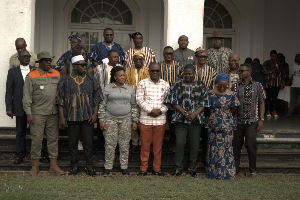
Cape Coast – The Central Regional branch of the National Disaster Management Organization (NADMO) has commenced a three-day residential leadership training workshop for its district directors and deputies across the region.
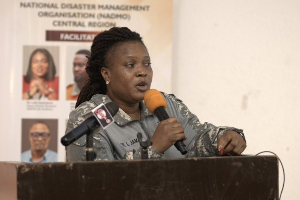
Objective and Theme
The program took off on Wednesday, April 8, 2026, at the Banquet Hall of the Regional Coordinating Council and is expected to end on Friday, April 10, 2026. Themed "Leadership and Capacity Building," the workshop aims to strengthen participants’ understanding of NADMO’s operational framework, expose them to the NADMO Act, deepen their knowledge of disaster management operations, and enhance their leadership skills in disaster prevention and response.
Stakeholder Remarks
Opening the session, the Deputy Director General (DDG) in charge of Finance and Administration at NADMO, Hajia Dr. (Mrs.) Lutfia Saeed Jamal, speaking on behalf of the Director-General, Major (Rtd) Dr. Joseph Bikanyi Kuyon, applauded the regional NADMO management under the leadership of Hon. Emmanuel Kwesi Dawood Mensah, Central Regional Director, for organizing the maiden regional training for all directors and deputies.
She expressed admiration not just for the number of attendees but for the sheer effort invested in making the workshop a reality. "I am very impressed, not only by the numbers present for this capacity building but by the tireless efforts put in place thus far," the DDG stressed.

Dr. Jamal noted that while the organization has built the capacity of all regional directors and their deputies, this marks the first time a regional body has organized such training for all district directors and their deputies. "This effort by the regional management deserves commendation," she stressed. "We also congratulate the staff for coming in their numbers. It is very overwhelming to witness such numbers," she added.
Turning to the participants, the DDG counseled them to take the training seriously in order to impart what they learn to the districts they serve.
Timely and Necessary
On the timeliness of the workshop, the Central Regional Minister, Hon. Ekow Panyin Okyere Eduamoah, noted the program was both timely and necessary, reflecting a shared commitment to strengthening leadership capacity and enhancing disaster preparedness across all districts.
Underscoring the importance of leadership training, he said: "Leadership remains the backbone of effective disaster management. As NADMO directors and deputies, you are the first point of coordination, response, and recovery when disasters occur."
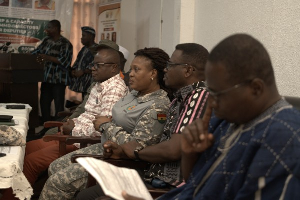
He reminded participants of the weight of their actions and inactions, saying: "Your decisions and actions directly affect how well our communities withstand and recover from emergencies." He highlighted that strong leadership requires foresight, accountability, coordination, and the ability to mobilize stakeholders effectively. It also requires a shift from reactive responses to proactive planning. This training, according to the minister, provides an opportunity to strengthen leadership skills and improve institutional readiness across the region.
Echoing similar sentiments, Dasebre Kwebu Ewusi VII, Platform Chairman of the Central Regional Disaster Risk Reduction and Climate Change Management Platform, emphasized that the programme, focused on leadership and capacity building, was both timely and necessary as the region continues to strengthen disaster risk governance and climate resilience.
Drawing a nexus between leadership and risk reduction, Dasebre observed that effective leadership remains at the heart of disaster risk reduction and climate change. "As NADMO directors and deputies at the metropolitan, municipal, and district levels, you occupy a critical position in safeguarding our communities," he said. "Your responsibilities go beyond responding to emergencies. You are expected to lead in prevention, preparedness, mitigation, and resilience-building."
Furthermore, Dasebre Kwebu Ewusi VII posited that strong leadership ensures effective coordination among assemblies, traditional authorities, security agencies, and community structures. Reminding trainees of their responsibilities, he noted: "The success of our disaster management efforts depends largely on your ability to mobilize stakeholders and provide direction at the local level."
The traditional ruler urged participants to shift from reactive to proactive disaster management. "Disaster risk management must move from being reactive to proactive – the ability to anticipate risks, prevent avoidable losses, and prepare our communities ahead of emergencies," he stressed.
He added that achieving this requires deliberate investment in early warning systems, public education and awareness, risk-informed development planning, and institutional readiness. As leaders at the local level, they must ensure that preparedness plans are functional, community volunteers are active, and coordination systems are responsive.
Psychological Support, Gender Mainstreaming Key Focus
The Regional Administrator for NADMO, Mr. Enoch Kwadwo Forson, told journalists that the training intends to equip participants to appreciate the collaborative nature of NADMO’s work, emphasizing that the organization’s mandate cannot be fulfilled alone.
Mr. Forson added that participants would also be exposed to psychological distress and psychosocial support, informing them that disasters affect not only people’s physical property but also their mental state. "People's emotional and psychological state are affected by disasters, and that needs to be addressed, not overlooked," he revealed.
He noted another critical area the training would emphasize: gender mainstreaming and the inclusion of people with disabilities in disaster assistance. "When disasters strike, it affects different genders differently," he stated. "Disasters also affect people with disabilities, and emergency response must be tailored to meet all categories of needs."
Way Forward
The Central Region NADMO three-day training workshop is currently underway at the RCC. It seeks to train district directors and their deputies in disaster prevention, risk management, and emergency response to become more effective leaders at the local level. The workshop’s ultimate impact, however, can only be verified in the future.

Copyright © 1994 - 2026 GhanaWeb. All rights reserved.










