



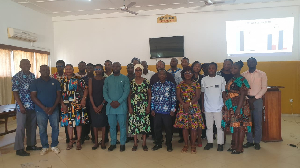
Cape Coast - The Ghana Statistical Service (GSS) has commemorated the 2025 African Statistics Day by launching its Governance Series Wave 2 Report (ASD) at the Regional Agriculture Office Conference Hall in Cape Coast on Thursday, November 20, 2025.
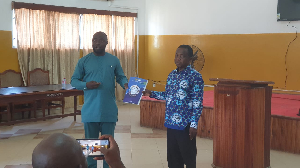
Theme “Leveraging Innovations in Data and Statistics to Promote a Just, Peaceful and Prosperous Society for Africans”, the series seeks to track public experiences and perceptions of governance, inclusiveness, and institutional integrity in Ghana.
As a nationally representative survey, the first wave of the series provided a foundational understanding of how citizens interact with governance systems and the extent to which these systems promote accountability and responsiveness.
Building on that foundation, the Wave 2 provides new insights into how governance dynamics are evolving and the progress achieved towards ensuring transparency and citizen-centred institutions.
According to the GSS, this release aligns with the ASD theme by highlighting how innovative approaches in data production and analysis enhance trust, foster peace, and support informed policymaking. The findings contribute to monitoring Sustainable Development Goal 16, which aims to promote peaceful and inclusive societies, ensure access to justice for all, and build effective, accountable institutions.
During a media interaction, the Central Region Government Statistician, Mr. Ernest Kpentey, observed that as part of the mandate of the GSS to provide statistics to support national development, strengthen governance systems, and contribute to good governance, they launched this report, focusing on bribery and corruption.
He mentioned that the whole report was hinged on two main United Nations Sustainable Development Goals - SDG 16.5.1 which measures the proportion of persons who had at least one contact with a public official and who paid a bribe or were asked for one in the previous 12 months. And SDG indicator 16.7.2 which also measures the "Proportion of population who believe decision-making is inclusive and responsive, by sex, age, disability and population group".
According to him, the two indicators are to ensure a free societal development trajectory. Incidentally, "during wave one in the Central Region, it was realised that 52.6%, as compared to 72.4% in wave 2, had encounters with a public official", he stated. This meant that out of every 10 Ghanaians, 7 had directly contacted one public official in wave 2.
A post-contact survey aimed at determining whether gifts were given to public officials contacted by Ghanaians revealed that in wave 1, 16.7% gave gifts, while in wave 2, only 15% did. Expanding on this, Mr. Kpentey emphasized that although the figure in wave 2 was lower than wave 1, he expressed concern that the percentage remained high, as the expectation was to achieve zero percentage points.
He was quick to add that such occurrences within the public service in the Central Region were very disturbing, detailing that "it was abnormal for anyone to receive a service and yet still have to part with something extra to a public officer", stressed the Regional Statistician.
Regarding the types of gifts given, he disclosed that 82.3% of the population, compared to 78.2%, provided monetary gifts to public officials in waves 1 and 2, respectively, in the Central region. The Regional Statistician emphasized that, although there was a slight decline in wave 2, it remained inappropriate and highly unacceptable for public officials to accept money from Ghanaians who require their services.
The Governance Series Wave 2 Report has been launched, and drawing lessons from Wave 1, there isn't any marked improvement in the incidence of public officials taking money from clients. As to what Ghana intends to do to achieve SDG 16.5.1 and 16.7.2, especially in the Central Region, remains to be seen. The GSS has fulfilled its obligations, and now the onus lies on other stakeholders to implement remedial measures to eradicate such occurrences from our public service.

Copyright © 1994 - 2026 GhanaWeb. All rights reserved.










