



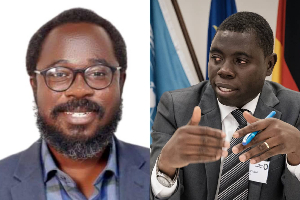
I have seen a worrying video where the Chief Executive Officer of the Ghana Tourism Development Company (GTDC), Prof. Kobby Mensah says that he is focused on his work at the GTDC and will not contribute to the ongoing discourse on the fight against illegal mining (galamsey). As the CEO of GTDC, he has a critical responsibility in ensuring environmental sustainability, a fundamental pillar of tourism development.
Tourism in Ghana heavily relies on natural and cultural heritage. Sites such as Kakum National Park, Mole National Park, and the many waterfalls and beaches across the country attract both local and international tourists. Illegal mining, or galamsey, poses a direct threat to these attractions by causing deforestation, water pollution, and land degradation. If left unchecked, the destruction caused by galamsey will reduce Ghana’s appeal as a tourism destination, leading to economic losses and job cuts in the industry.
The GTDC, as the government agency responsible for tourism development, has a direct role to play in preserving the country’s natural resources. To remind Prof Mensah, the core functions of the GTDC include site management, infrastructure development, and sustainability efforts. Ignoring the fight against galamsey means neglecting the very foundation upon which Ghana’s tourism thrives. A CEO who distances himself from such a crucial issue is, therefore, failing in his duty to safeguard the sector he leads.
For instance, GTDC through the Ghana Tourism Development Programme has been involved in the completion of the following ecotourism projects in the past: Kintampo Waterfalls Site Upgrade, Gwolu Receptive Facility, Bonwire Crafts Village, Ankasa Forest Reserve Receptive Facility, Nzulezu Receptive Facility, Gushegu Smock Village among others.
In addition, GTDC has provided grants to the following attractions: Afadjato Ecotourism Park, Paga Crocodile Pond and Bunso Eco Village.
It is instructive to state that globally, tourism is shifting towards sustainability. Many countries have, thus, adopted eco-tourism models that emphasize the protection of natural environments while generating revenue. Ghana cannot afford to fall behind in this trend. If galamsey continues to destroy Ghana's forests and water resources, the country will lose its competitive edge in the tourism industry. The GTDC should be at the forefront of advocating for and implementing sustainable tourism policies that protect the environment.
Prof. Mensah in the interview stated that his expertise is not in the area and that is the reason why he is focusing on his new job. I wish to remind him that leadership in the tourism sector goes beyond infrastructure development and marketing. It encompasses a commitment to environmental conservation. As CEO, Prof. Kobby Mensah should take a proactive stance in the fight against illegal mining. He should work closely with the Ministry of Tourism, Culture and Creative Arts, Environmental Protection Agency, and other relevant stakeholders to ensure that Ghana’s natural landscapes are preserved for future generations. A failure to act on environmental sustainability is a failure to fulfill his mandate as the leader of GTDC.
Tourism and environmental sustainability are inseparable. The CEO of the Ghana Tourism Development Company cannot ignore the impact of illegal mining and claim to be focused on his work. A responsible tourism sector requires proactive leadership that ensures the protection of natural resources. He should leverage on his role as CEO to promote ecotourism in our forest reserves as an alternative to galamsey.
If Ghana is to sustain its tourism industry, those in charge must recognize that fighting galamsey is not optional but an integral part of their duty.
By Richmond Yeboah (Ph.D)
Department of Tourism Management
Cape Coast Technical University



Copyright © 1994 - 2026 GhanaWeb. All rights reserved.










