This blog is managed by the content creator and not GhanaWeb, its affiliates, or employees. Advertising on this blog requires a minimum of GH₵50 a week. Contact the blog owner with any queries.
Yaw walked into a boardroom in Abidjan fully prepared.
He had practised his French introduction for two months. His vocabulary was solid. His confidence was high.
Then he opened his mouth — and told a room full of Francophone executives that he was a female director.
He didn't know. Nobody in the room corrected him. But every Francophone in that room felt it — and the business opportunity he had spent months building quietly slipped away.
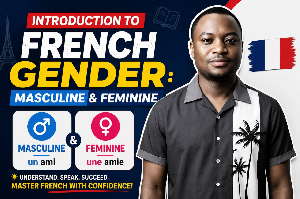
This is what happens when Ghanaian professionals learn French without understanding one of its most fundamental rules: every noun in French has a gender — and everything around it must agree.
In this video, I break down exactly why French masculine and feminine matters for your career — not as a grammar lesson, but as a professional survival guide for every Anglophone professional working in or with Francophone West Africa.
Yaw's story is playing out across Ghana every week — in meetings, emails, proposals, and interviews where qualified professionals are unknowingly undercutting themselves with gender errors they were never taught to avoid.
The good news? French gender follows patterns — and patterns can be learned faster than you think.