



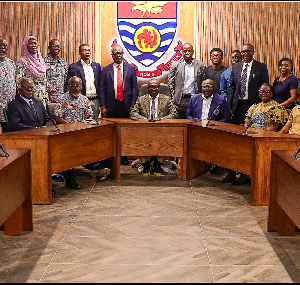
Ghana’s healthcare future is under the spotlight as a high-level team from the Medical and Dental Council of Ghana begins a critical assessment of training facilities and academic programmes at the University of Cape Coast School of Medical Sciences.
The exercise is more than a routine inspection—it is a decisive step in ensuring that the next generation of doctors and health professionals are trained to meet the country’s growing healthcare demands.
Why This Assessment Matters
Backed by the Health Professions Regulatory Bodies Act, 2013 (Act 857), the Council’s mandate is clear: ensure that medical training institutions meet strict standards or risk losing accreditation.
Leading the exercise, the Registrar, Dr Divine N. Banyubala, stressed that the evaluation will determine whether the institution maintains, upgrades, or loses its accreditation status.
“This is a core statutory duty—to ensure quality in the training of doctors, dentists and physician assistants,” he stated.
For an advocacy audience, the message is urgent: the quality of medical education directly affects the quality of healthcare delivery across the country.
Beyond Classrooms: A Full-System Check
The assessment goes beyond lecture halls. It covers:
Governance and leadership systems
Academic curriculum and relevance
Staffing capacity and expertise
Student admission processes
Welfare and learning environment
Each of these elements plays a role in shaping competent, ethical, and responsive health professionals.
Rising Demand, Limited Capacity
While commending the Council’s regulatory role, Acting Vice-Chancellor Prof. Denis Aheto raised a pressing concern—the growing number of qualified applicants seeking admission into medical school.
He appealed for an increase in student intake from 160 to 200 to ease mounting pressure.
But this raises a critical policy question: Can Ghana expand access to medical education without compromising quality?
The Bigger Picture: Health System at Risk
Ghana continues to face gaps in healthcare delivery, particularly in underserved areas where doctor-to-patient ratios remain low.
Advocates argue that:
Expanding training without quality risks producing underprepared professionals
Maintaining strict standards without expansion limits the number of doctors available
A balanced, well-regulated system is essential for sustainable healthcare
A Call for Accountability and Investment
The ongoing assessment highlights the need for:
Increased investment in medical training infrastructure
Stronger regulatory enforcement
Strategic expansion of training capacity
Continuous monitoring of standards
Ultimately, ensuring quality medical education is not just an institutional issue—it is a national priority.
What’s at Stake
The outcome of this assessment will shape not only the future of the University of Cape Coast medical programme, but also the quality of care millions of Ghanaians will receive in the years ahead.
As regulators tighten oversight and institutions push for expansion, one principle must remain non-negotiable: every Ghanaian deserves access to well-trained, competent healthcare professionals.
Source: https://news.ucc.edu.gh/medical-and-dental-council-team...

Copyright © 1994 - 2026 GhanaWeb. All rights reserved.










