



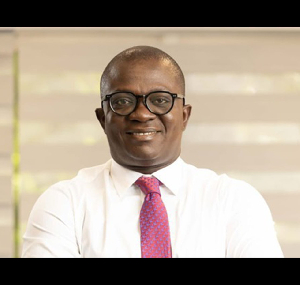
There are politicians whose influence comes mainly from the position they occupy. There are others whose influence is built over time through relationships, resources, organisation and the ability to remain relevant across different political and professional spaces.
Bryan Acheampong presents an interesting case.
The Abetifi Member of Parliament has moved through business, technology, national security, the Interior Ministry, agriculture and parliamentary politics. Ghana's Parliament lists him as a former Minister of Food and Agriculture and former Minister of State at both the Ministry of the Interior and the Ministry of National Security. His parliamentary profile also records his previous positions as CEO of Emery Invest Ghana Limited and INTU-IT. He currently serves on Parliament's Food, Agriculture and Cocoa Affairs Committee and is Ranking Member of the Security and Intelligence Committee.
That is not an ordinary political CV.
It gives Acheampong experience in areas that rarely come together in one political career.
There is also the private-sector side.
His business background adds another dimension to his political profile. It means that long before his most recent national political contest, he had experience in managing private organisations and working around technology and investment.
The question, therefore, is not simply who Bryan Acheampong is.
The more interesting question is **how he has built his influence and what that influence is producing.**
## A politician who appears to understand organisation
Acheampong's political style has often been associated with firmness and directness.
During his campaign for the NPP's 2026 presidential primary, he presented himself as a candidate capable of rebuilding the party's grassroots structures, restoring discipline and providing decisive leadership.
The more useful evidence, however, came when the votes were counted.
Acheampong finished third in the NPP's presidential primary with **36,303 votes**, representing 18.53 per cent of the 195,901 valid votes cast. Mahamudu Bawumia won with 110,643 votes, while Kennedy Agyapong placed second with 46,554 votes.
Acheampong's performance was particularly interesting geographically.
Graphic Online reported that he won the Volta Region and six constituencies in the Eastern Region. In the Kwahu enclave, he won Abetifi, Mpraeso and Afram Plains South. He also won Upper Manya, Yilo Krobo and Asene-Akroso-Manso.
Ghana News Agency's report on the Eastern Region results also recorded Acheampong's 5,918 votes in the region, behind Bawumia's 10,487.
That does not mean he enjoys nationwide popularity.
It does show that his political organisation was able to generate measurable support outside his immediate constituency.
That is worth paying attention to.
## Resources matter
Politics is not only about speeches.
It is about people, structures, relationships, access and resources.
Acheampong's background gives him experience in some of these areas.
His business experience predates his current national political profile, while the Bryan Acheampong Foundation has operated programmes in education, skills development and community interventions.
According to the Foundation, it was established in 2017 to address poverty and improve quality of life in Kwahu East and beyond. It reports that more than 50 undergraduates and 115 teachers have benefited from its scholarship programmes and that more than 155 young people have been trained in trades including tailoring, mechanics and hairdressing.
There is independent reporting to support some of the educational interventions.
Graphic Online reported that more than 90 students had benefited from Acheampong's educational sponsorship programme. The report said the programme covers areas including tuition, boarding, food and provisions.
These figures should still be read carefully.
Some of the wider programme numbers come directly from the Foundation. That makes them useful evidence of what the organisation says it has done, but they should not automatically be treated as independently audited impact figures.
That distinction is important.
## The young people question
This may be one of the most important parts of the Acheampong story.
Ghana has no shortage of politicians who speak about the youth.
The harder question is what they actually put behind the word *youth*.
Acheampong's foundation has focused on education and practical skills.
Its Youth in Apprenticeship Project says **155 young people have completed vocational training**, while 17 apprentices are currently receiving skills training. The Foundation also reports that 96 drivers have acquired or renewed licences to support their livelihoods and mobility.
The Foundation also reports scholarships for undergraduates and teachers and other educational interventions.
This is where his public record becomes more interesting.
For a young person who cannot afford university fees, a scholarship is not a political slogan.
For someone without employable skills, an apprenticeship can be a real opportunity.
For a young person trying to enter the transport or logistics sector, obtaining a driving licence can have economic value.
The important thing, however, is to move beyond counting beneficiaries.
The next level of assessment should ask what happens after the intervention.
How many beneficiaries are now employed?
How many have established businesses?
How many apprentices have become employers?
How many scholarship beneficiaries have returned to their communities as professionals?
How sustainable are the programmes?
Those questions are not an attack on Acheampong.
They are the questions that should be asked of anybody who claims to be changing lives.
## The technology and future-of-work question
Acheampong's public interests have also moved beyond traditional politics.
In June 2025, he spoke at a UniMAC lecture on artificial intelligence and the future of work, arguing that Ghana needed an AI strategy reflecting the country's own priorities.
He specifically mentioned agriculture, education, finance and governance and called for investment in infrastructure, policy and talent development. He also challenged young people to see AI as a tool they needed to master and use responsibly.
He also proposed a National AI Policy Framework and an AI and Emerging Technologies Commission, while calling for greater involvement of young people in AI development.
At the same event, he pledged to support UniMAC with 50 computers and AI tools for teaching and learning.
That is significant because the employment challenge facing Ghana's youth is changing.
The question is no longer only about traditional jobs.
Technology is changing journalism, banking, agriculture, advertising, education, manufacturing and almost every other sector.
A politician talking about youth employment without talking about technology risks missing part of the future.
Acheampong's AI intervention suggests that he recognises that shift.
The real test, again, is implementation.
Ideas are important.
Results are more important.
## Firmness can be an asset — and a question
Acheampong's firmness is part of his political identity.
His background in national security and the Interior Ministry also gave him experience in institutions where decisions often have to be made under pressure.
That background may partly explain the directness that has become associated with him.
It also raises a legitimate question.
How does a politician balance firmness with consultation?
How does he distinguish decisive leadership from simply having one's way?
Those are questions that cannot be answered by campaign speeches.
They require observing how a politician behaves when faced with disagreement, criticism and institutional constraints.
That is why a proper conversation with Acheampong would be useful.
## The business and politics conversation
There is another issue that cannot be ignored.
Acheampong's business background has brought him into public controversy.
The proposed strategic partnership involving SSNIT hotels and Rock City Hotel became a major national issue in 2024.
Samuel Okudzeto Ablakwa petitioned CHRAJ over the transaction and raised allegations concerning conflict of interest, abuse of power, procurement breaches and other matters. Those were allegations raised by Ablakwa and should not be presented as established findings against Acheampong.
SSNIT, for its part, stated that it had followed due process in seeking a strategic investor for the hotels.
The larger point is that when a politician has substantial private-sector interests, questions about transparency and potential conflicts will naturally receive attention.
That scrutiny is part of public accountability.
It should not automatically become an accusation of wrongdoing.
## What makes Bryan Acheampong different?
The answer may lie in the combination.
He has business experience.
He has technology experience.
He has security and government experience.
He has parliamentary experience.
He has agricultural policy experience.
He has a constituency-level development structure.
And he has demonstrated that he can mobilise a significant number of delegates in a national party contest.
None of these things, individually, makes a politician successful.
Together, however, they create a political profile worth watching.
His 36,303 votes in the NPP presidential primary should not be dismissed simply because he did not win. At the same time, those votes should not be exaggerated into evidence of nationwide popularity. They demonstrate something more specific: a substantial level of support within the NPP's presidential-electorate structure in 2026.
That is the evidence.
The interpretation should be left open.
## The interview I am looking for
As a journalist, I am particularly interested in going beyond the speeches, press statements and public appearances.
I am therefore looking for an opportunity to sit down with Dr Bryan Acheampong **one-on-one** for a detailed interview.
There are questions I would want to put directly to him.
What exactly drives his political ambition?
How does he build and maintain his grassroots structures?
Where does he see the future of the NPP after the 2026 presidential primary?
What does he believe went right and wrong with his campaign?
What does he intend to do with the political support he has accumulated?
What is the measurable impact of the Bryan Acheampong Foundation's youth programmes?
What happens to beneficiaries after the scholarships and apprenticeships end?
How does he separate his private business interests from his public responsibilities?
What did his years in National Security teach him about leadership?
What does he believe Ghanaian young people actually need from politicians?
And perhaps the most important question:
**What does Bryan Acheampong want his political legacy to be?**
Those are questions that cannot be fully answered by reading a profile or campaign statement.
They require the man himself.
Until that conversation happens, this article remains an assessment of the public record — the positions he has held, the structures associated with him, the programmes documented by his foundation and independent media, the support he demonstrated within the NPP and the questions that naturally follow.
Bryan Acheampong has already built a political story.
The next chapter will depend not only on how much influence he has accumulated, but on what he chooses to do with it.
And I would like to hear that story from him, directly.
neoreportgh.com
neoreportgh@gmail.com
admin@neoreportgh.com
nanaeffahobeng@gmail.com
Sources used
Parliament of Ghana — Hon. Bryan Acheampong's official parliamentary profile: education, employment history and committee membership.
Ghana News Agency — NPP 2026 presidential primary results: official EC figures and Acheampong's 36,303 votes.
Graphic Online — analysis of Acheampong's performance: regional and constituency-level results.
Bryan Acheampong Foundation — Livelihood Empowerment: youth apprenticeship, vocational training and driver's licence figures.
Bryan Acheampong Foundation — About Us: scholarship and broader programme figures.
Graphic Online — educational sponsorship programme: independently reported information on student beneficiaries and the nature of the support.
Ghana News Agency — AI and future of work: Acheampong's statements on AI, youth readiness and his proposed support for UniMAC.
Ghana News Agency — SSNIT/Rock City controversy: Ablakwa's petition and SSNIT's response.

Copyright © 1994 - 2026 GhanaWeb. All rights reserved.










