



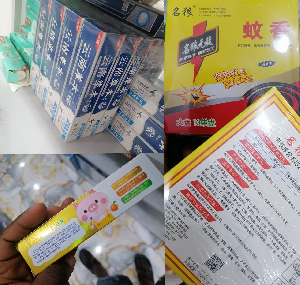
Non-English Labels On Retail Products Raise Consumer Safety And Information Concerns
The growing presence of foreign-owned businesses in Ghana has contributed significantly to economic development, job creation, and improved consumer choice. From shopping malls and retail outlets to restaurants and manufacturing companies, international investors continue to play an important role in expanding the country's commercial landscape.
However, consumer rights advocates are raising concerns over the sale of products with labels written exclusively in foreign languages, warning that the practice undermines consumer protection and may violate Ghana's product labelling regulations.
The concern has been highlighted in some foreign-owned retail outlets, including the Red Star Mall in Cape Coast, where a number of products reportedly carry labels that are not written in English, making it difficult for consumers to understand important information about the goods they purchase.
According to consumer advocates, product labels serve as a critical source of information, helping buyers understand ingredients, usage instructions, safety precautions, expiry dates, storage requirements, and other essential details.
When such information is presented only in a language unfamiliar to consumers, it creates challenges that may affect informed decision-making and potentially expose buyers to health and safety risks.
Industry observers note that while competitive pricing and product diversity are beneficial to consumers, businesses operating in Ghana must also comply with local regulations designed to protect the public.
Under the Ghana Standards Authority's Food, Drugs and Other Goods General Labelling Rules (L.I. 1541), products sold on the Ghanaian market are required to provide information in English to ensure that consumers can readily understand the contents and instructions associated with the product.
Failure to comply with the labelling requirements may attract regulatory action from authorities such as the Ghana Standards Authority (GSA) and the Food and Drugs Authority (FDA), including the impounding of products and the imposition of sanctions.
Consumer protection campaigners are therefore calling on regulatory agencies to intensify market surveillance and ensure strict compliance with labelling laws across the country.
They argue that enforcing labelling standards is not only a legal requirement but also a matter of public health, transparency, and consumer rights.
"Consumers have a right to know what they are buying. Clear and understandable labelling empowers people to make informed choices and protects them from avoidable risks," a consumer advocate noted.
Stakeholders are also urging foreign and local businesses alike to prioritize compliance by ensuring that all products placed on the Ghanaian market carry accurate and accessible English-language information.
As Ghana continues to attract foreign investment and expand its retail sector, advocates believe consumer protection measures must keep pace to guarantee that economic growth benefits both businesses and the people they serve.
They maintain that a competitive marketplace should not only offer affordable products but also uphold the fundamental right of consumers to access information in a language they understand.
neoreportgh.com

Copyright © 1994 - 2026 GhanaWeb. All rights reserved.










