



Seven-Year Ghana-Norway Partnership Leaves Lasting Legacy in Fisheries and Aquaculture Development
Ghana has officially brought to a close the Fish for Development (FFD) Programme, a seven-year initiative that has played a significant role in strengthening the country's fisheries and aquaculture sectors while improving the livelihoods of thousands of people who depend on them.
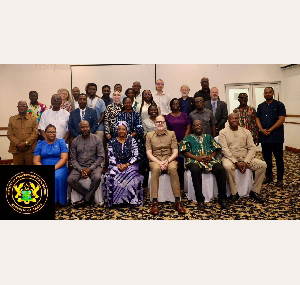
The programme, implemented under the longstanding cooperation between Ghana and Norway, concluded with a stakeholder workshop held in Accra, where policymakers, development partners, fisheries experts, and industry players reflected on key achievements and discussed strategies for sustaining the gains made over the years.
For many coastal and fishing communities, the programme represented more than a development intervention. It served as a platform for improving fisheries governance, promoting sustainable aquaculture practices, strengthening institutional capacity, and creating opportunities for economic growth within the sector.
Speaking on behalf of the Minister for Fisheries and Aquaculture Development, Hon. Emelia Arthur, the Chief Director of the Ministry, Dr. Afisah Zakariah, described the initiative as a major milestone in the partnership between Ghana and Norway.
She praised Norway, the Norwegian Agency for Development Cooperation (NORAD), and local implementing institutions for their contributions toward building a more resilient and sustainable fisheries sector. According to her, the programme helped strengthen evidence-based decision-making, promoted innovation within aquaculture, and enhanced technical expertise across key institutions.
Stakeholders at the event highlighted several achievements that are expected to have a lasting impact on the sector. Among them is the development of Ghana's Aquaculture Development Plan (2024–2028), which provides a roadmap for expanding fish production and supporting the growth of aquaculture as a source of food, employment, and income.
The programme also supported the digitalisation of aquaculture farm registration systems, an important step toward improving planning, monitoring, and regulation within the industry. In addition, efforts to strengthen aquatic animal health systems are expected to improve fish health management and boost productivity among fish farmers.
Within the marine fisheries sector, the programme contributed to the development of a new Fisheries Management Plan aimed at promoting sustainable exploitation of fish resources. Stakeholders also pointed to improvements in fisheries data collection and management systems, which are essential for informed decision-making and effective resource management.
Another notable achievement was the strengthening of Monitoring, Control and Surveillance (MCS) systems through specialised training and capacity-building initiatives. Advocates say improved enforcement mechanisms are critical to combating illegal fishing activities and protecting Ghana's declining fish stocks.
Executive Director of the Fisheries Commission, Prof. Benjamin Campion, and Norway's Ambassador to Ghana, H.E. John Mikal Kvistad, commended the partnership and described it as a model for sustainable ocean governance and international cooperation.
Their remarks underscored the growing recognition that sustainable fisheries management is not only an environmental priority but also a social and economic necessity for communities whose survival depends on healthy marine and inland water resources.
As the Fish for Development Programme comes to an end, stakeholders are emphasizing the need to build on the foundations laid over the past seven years. They argue that continued investment in innovation, research, governance reforms, and strategic partnerships will be essential to safeguarding the future of Ghana's fisheries sector.
For fishing communities, fish farmers, processors, traders, and the many households whose livelihoods depend on the sector, sustaining these gains could mean greater economic resilience, improved food security, and healthier fish stocks for generations to come.
With the programme now concluded, attention is turning to how Ghana can leverage the lessons, systems, and partnerships established under the initiative to drive the next phase of sustainable fisheries and aquaculture development.
Stakeholders remain hopeful that the progress achieved through the Fish for Development Programme will continue to shape policies and actions that protect aquatic resources, strengthen livelihoods, and ensure a sustainable future for Ghana's fisheries sector.
neoreportgh@gmail.com
neoreportgh.com

Copyright © 1994 - 2026 GhanaWeb. All rights reserved.










