



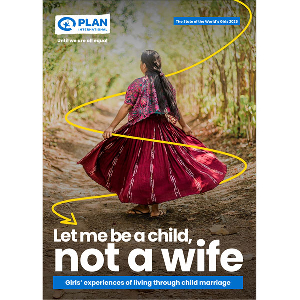
A newly released report titled “Let Me Be a Girl” has issued a strong call for urgent national action to protect girls’ education and strengthen their empowerment, warning that thousands of girls continue to face systemic barriers that deny them the opportunity to learn, grow, and reach their full potential .
The report highlights that education—both formal and informal—remains the most powerful tool for breaking cycles of poverty, inequality, and vulnerability among girls, yet many continue to be excluded due to socio-cultural, economic, and structural challenges .
According to the findings, girls’ access to formal education is frequently disrupted by early responsibilities within households, economic hardship, harmful social norms, and insecurity. These barriers often result in irregular school attendance, poor learning outcomes, and, in many cases, complete withdrawal from school .
The report further emphasizes that education is not limited to the classroom. Informal education—including life skills training, mentorship, community learning spaces, and vocational exposure—is identified as critical to empowering girls with confidence, decision-making ability, and economic resilience. However, such opportunities remain limited and unevenly distributed, particularly in underserved communities .
The report warns that when girls are denied access to both formal and informal learning pathways, they become increasingly vulnerable to exploitation, dependency, and long-term exclusion from economic and civic participation. Conversely, when girls are supported to stay in school and gain practical skills, the benefits extend beyond the individual to families, communities, and national development .
“Let Me Be a Girl” calls for coordinated action by government, civil society, communities, and development partners to remove barriers to girls’ education and invest in empowerment programmes that are safe, inclusive, and culturally responsive. The report stresses the need for policies and interventions that prioritize girls’ education as a right, not a privilege .
It also underscores the importance of creating enabling environments—both in schools and communities—where girls are protected, supported, and encouraged to learn, lead, and thrive. The report advocates sustained investment in girl-focused education initiatives as a foundation for gender equality and sustainable development .
As the report concludes, empowering girls through education is not only a moral obligation but a strategic investment in the future. When girls are educated, societies prosper—and when they are denied that chance, the cost is borne by generations to come.
Get full report on : neoreportgh@gmail.com
#Plan International
#Christian Aid
#Planned Parenthood Association of Ghana
admin@neoreportgh.com
neoreportgh.com



Copyright © 1994 - 2026 GhanaWeb. All rights reserved.










