



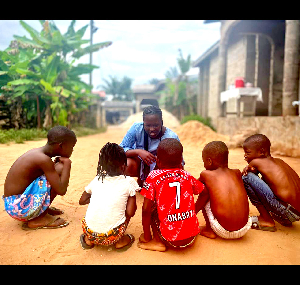
Protecting children today is an investment in the future of the community, By Anthoinette Tracy Dadzie, winner of Miss Bakatue 2026.
A child should grow up in an environment where they feel safe, loved, respected and protected. Yet for many children, the very places that should provide safety such as homes, schools, communities and other familiar environments, can also expose them to different forms of abuse, neglect and exploitation.
Child abuse is not simply a family matter. It is a child-protection issue and a community responsibility. As in communities across Ghana, protecting children requires parents, caregivers, teachers, traditional and religious leaders, health professionals, social workers, law enforcement agencies and ordinary community members to work together.
This is the focus of the project “Minimizing the Risk of Child Abuse in Elmina,” which seeks to create greater awareness of child abuse, identify factors that can place children at risk, promote early intervention and encourage members of the community to take action when a child's safety or wellbeing is threatened.
The objective is not to accuse or stigmatise families. Rather, it is to encourage prevention, responsible care giving, early identification and appropriate reporting.
What is child abuse?
Child abuse is any act or failure to act that harms or places a child at risk of harm. It may take the form of physical, emotional or psychological abuse, sexual abuse, neglect, or exploitation. In Ghana, children are protected by several laws, including Article 28 of the 1992 Constitution, which guarantees children special care and protection from physical and moral hazards, and the Children’s Act, 1998 (Act 560), which provides for the care and protection of children and requires suspected child abuse to be reported. The Domestic Violence Act, 2007 (Act 732) also provides protection against forms of domestic violence affecting children. Protecting children is therefore not only a moral responsibility but also a legal and collective responsibility.
Physical abuse
Physical abuse involves deliberately causing physical harm to a child. Examples may include excessive beating, hitting or other forms of violent punishment. While discipline is part of parenting, discipline should not become violence. Children have a right to protection from cruel, inhuman or degrading treatment or punishment.
Emotional and psychological abuse
Not all abuse leaves visible injuries. Constant insults, humiliation, threats, rejection, intimidation and deliberately making a child feel worthless can affect a child's emotional wellbeing and development. Children need correction and guidance, but they also need encouragement, respect and reassurance.
Sexual abuse
Sexual abuse occurs when a child is subjected to sexual activity or exploitation. This is because children may be unable to understand, resist or report what is happening to them, adults have a particular responsibility to protect them from sexual abuse and respond appropriately to concerns. Any suspicion of sexual abuse should be taken seriously and referred through appropriate child-protection channels.
Neglect
Neglect occurs when a child's basic needs are persistently not adequately met. These needs may include food, clothing, shelter, healthcare, education, supervision and emotional care. Poverty can make parenting difficult, but financial hardship should not mean that children are forgotten or denied the protection and support they need. Communities and social-protection systems have an important role to play in supporting vulnerable families.
Exploitation
Children can also become vulnerable to exploitation when they are placed in situations where their safety, education, health or development is threatened. Examples may include hazardous work, harmful forms of street trading, dangerous fishing-related activities and other situations where children are exposed to unacceptable risks. Ghana's legal framework specifically protects children from work that threatens their health, education or development.
Why should the community care?
Child protection cannot be left to parents alone. A child interacts with many people throughout the day such as the family members, teachers, friends, neighbours, religious leaders, health workers, traders and other community members. This means that anyone who notices a worrying change in a child's behaviour, living conditions or safety may be in a position to help. Sometimes the warning signs may not be obvious. A child may become unusually withdrawn, fearful, aggressive or reluctant to attend school. Other children may try to communicate what they are experiencing directly or indirectly. Adults should therefore learn to listen to children without immediately dismissing their concerns. Most importantly, children should know that asking for help is not wrong.
Factors that can increase a child's vulnerability
Child abuse can occur in different social and economic circumstances. However, certain situations may increase vulnerability.
These can include:
• Poverty and severe financial hardship.
• Lack of parental supervision.
• Family conflict and domestic violence.
• Harmful beliefs about discipline.
• Lack of knowledge about children's rights.
• Children being placed in hazardous work.
• Weak communication between children and caregivers.
• Social isolation.
• Failure to report suspected abuse.
• Exploitation of children who are living or working without adequate adult protection.
These factors do not mean that abuse will automatically occur. Rather, they highlight areas where prevention and community support may be necessary.
The impact of abuse on children
The consequences of child abuse can extend beyond the immediate incident. A child who experiences violence, neglect or exploitation may experience difficulties affecting their emotional wellbeing, education, relationships and general development. Fear and insecurity can interfere with a child's ability to learn and participate confidently in school and community life.
This is why prevention is so important.
Waiting until serious harm has occurred before responding is not enough. Communities must identify risks early and create systems that allow children and families to receive appropriate support.
What does Ghanaian law say?
Ghana has established a legal and institutional framework for protecting children.
• The 1992 Constitution of Ghana, Article 28, provides important protections for children. It recognizes children's rights to special care and protection and states that children should be protected from work that threatens their health, education or development. It also prohibits subjecting children to torture or cruel, inhuman or degrading treatment or punishment.
• The Children's Act, 1998 (Act 560) defines a child as a person below 18 years and establishes the best interests of the child as a central consideration in matters concerning children.
• Importantly, Section 17 of the Children's Act requires people who have information about child abuse to report it. Ghana's Ministry of Gender, Children and Social Protection has also published procedures for reporting suspected abuse.
This means that child protection is not simply a moral responsibility. There are also legal responsibilities surrounding the protection and reporting of abuse.
Who should respond when abuse is suspected?
Child protection requires cooperation between different institutions.
The Ministry of Gender, Children and Social Protection's child-protection structures include services concerned with preventing and responding to violence, abuse, neglect and exploitation. The Department of Children works to promote the survival, protection, participation and development of children, while social-development structures provide professional social-welfare services and child-rights protection.
Where abuse or neglect is suspected, the case should be reported through appropriate child-protection channels so that it can be assessed and investigated by the relevant professionals. The Ministry's case-management guidance states that suspected cases of abuse, neglect or abandonment should be reported and investigated by a social worker, with police or health services involved where appropriate.
What can families do?
Parents and caregivers have a major role to play in preventing child abuse.
They can:
- Communicate openly with children.
- Listen when children express concerns.
- Use positive and non-violent approaches to discipline.
- Provide appropriate supervision.
- Know who their children interact with.
- Take changes in behaviour
- Teach children about personal safety and appropriate boundaries.
- Seek help when financial, emotional or family problems become overwhelming.
- Report suspected abuse rather than keeping it secret.
A child should never be made to feel that reporting abuse will result in punishment or rejection.
What can schools do?
Schools are important environments for identifying children who may be experiencing difficulties. Teachers and school authorities can contribute by:
- Creating safe environments where children can speak.
- Paying attention to significant behavioural changes.
- Educating pupils about their rights and personal safety.
- Strengthening communication between schools and parents.
- Following appropriate procedures when concerns about a child's welfare arise.
- Referring cases to the appropriate child-protection professionals.
Teachers should not attempt to investigate serious allegations themselves. Their responsibility is to listen appropriately, protect the child and follow established reporting and referral procedures.
What can community leaders do?
Traditional, religious and community leaders can help change attitudes that may allow abuse to remain hidden. They can use community meetings, religious gatherings, schools and other platforms to promote:
- Positive parenting.
- Non-violent discipline.
- Children's rights.
- Safe reporting.
- Prevention of exploitation.
- Support for vulnerable families.
- Community responsibility for child protection.
Community leaders can also help ensure that child-protection concerns are not dismissed simply because they involve relatives, neighbours or influential members of the community.
The role of young people
Children and young people should also be encouraged to speak when they feel unsafe.
They should understand that:
“It is not your fault when an adult harms you.”
Children should know trusted adults they can approach when they need help, including responsible parents or caregivers, teachers, health professionals, social workers and other trusted adults. Creating safe spaces where children can communicate without fear is an important part of prevention. A shared responsibility for Elmina, K.E.E A., Cape Coast, Central region and Ghana minimizing the risk of child abuse cannot be achieved by one individual or one organisation. It requires a coordinated effort.
Parents must protect their children.
Teachers must remain alert.
Health professionals must respond appropriately.
Social workers must provide professional support.
Law-enforcement agencies must respond to cases within their mandate.
Traditional and religious leaders must promote safe and protective communities.
Citizens must understand that looking away from suspected abuse can leave a vulnerable child without help.Ghana already has child-protection laws and institutions. The challenge is ensuring that people understand these protections and that concerns are identified, reported and acted upon appropriately. Ghana's national child-protection system includes government agencies and community-level structures designed to support prevention, response and rehabilitation.
A call to action
The protection of children should not begin only after a serious incident makes the news.
It should begin at home.
It should continue in schools.
It should be reinforced in churches, mosques and traditional spaces.
It should be supported by health and social services.
And it should become part of everyday community responsibility.
Every child deserves to grow up in an environment where they can learn, play, develop and dream without fear of violence, exploitation or neglect.
The message is simple:
Protecting children is everyone's responsibility.
When a community protects its children, it protects its future.
When a community listens to children, it gives them a voice.
When a community reports abuse, it creates an opportunity for intervention.
And when a community chooses prevention over silence, it creates a safer environment for generations to come.
Conclusion
My project “Minimizing the Risk of Child Abuse ” is therefore a call for awareness, prevention and collective action. Child abuse should never be normalised, hidden or treated as a private issue when a child's safety is at risk.
Every child deserves protection.
Every child deserves a voice.
Every child deserves the opportunity to grow into a healthy, confident and responsible adult.
A CHILD WHO IS PROTECTED TODAY BECOMES A RESPONSIBLE ADULT TOMORROW.
neoreportgh.com

Copyright © 1994 - 2026 GhanaWeb. All rights reserved.










