



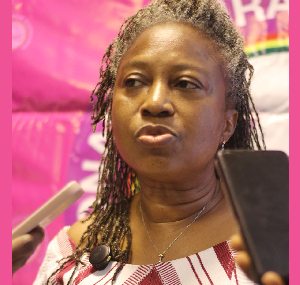
The National Insurance Commission (NIC) is stepping up efforts to improve insurance education and public understanding of insurance products, as part of measures to build greater trust and increase insurance uptake among Ghanaians.
Speaking during a stakeholder engagement with the insurance industry in the Central Region, the Acting Commissioner of the National Insurance Commission, Dr. Abiba Zakariah, said the Commission is in discussions with universities across the country to establish insurance demonstration centres on university campuses.
According to Dr. Zakariah, the proposed centres will create opportunities for young people to learn more about insurance, explore the industry and share their ideas and interests.
She said the centres will also help the Commission understand where the minds and interests of young people are heading, enabling the necessary support to be provided to them.
More importantly, she said, exposing young people to insurance education early will help them make informed decisions about insurance as they enter adulthood.
The initiative forms part of the Commission's broader responsibility to promote public education and ensure a fair, safe, efficient and sustainable insurance market in Ghana. Under the Insurance Act, 2021 (Act 1061), the NIC is responsible for the effective administration, supervision, regulation, monitoring and control of the insurance business, including protecting the interests of policyholders and the insurance industry.
Trust Remains A Major Challenge
Dr. Zakariah identified trust as one of the major challenges confronting the insurance industry in Ghana.
She explained that insurance is fundamentally a business of trust and stressed the need to strengthen confidence between insurance providers and their clients.
According to her, a significant reason for the lack of trust is that many people do not have a deep understanding of insurance, its policies and how the industry operates.
She said the Commission therefore sees insurance education as one of the key tools for addressing the challenge.
Dr. Zakariah further noted that many Ghanaians may not be aware of the wider social protection role of insurance and the various mechanisms that provide support in difficult circumstances.
She cited support related to road accidents and other emergencies, including situations where accident victims require assistance and their relatives cannot immediately be traced.
The NIC itself operates the Motor Compensation Fund, which was established to compensate persons injured by vehicles where compensation cannot be obtained from an insurance company.
Making Insurance Easier To Understand
Dr. Zakariah said the Commission is also far advanced with plans to package insurance information in a language and format that ordinary Ghanaians can understand.
She explained that when people clearly understand what they are buying and what an insurance policy provides, they are more likely to make decisions with confidence and defend the value of the insurance they have purchased.
She pointed to funeral insurance as an example of a product that has gained considerable acceptance among Ghanaians, partly because people have a clearer understanding of what the product offers.
The broader challenge, she suggested, is to bring that same level of understanding to other insurance products.
NIC Eyes AI And Digital Transformation
The Acting Commissioner also highlighted technology and artificial intelligence as important areas the Commission is exploring to make the insurance sector more innovative and responsive.
She said the NIC is looking at ways to digitalise compulsory lines of insurance and improve services through technology.
One example is the Motor Insurance Database (MID), which has made it easier to verify the insurance status of vehicles.
The Commission's digital systems allow motorists and other stakeholders to verify motor insurance information, while the NIC is also working with the Driver and Vehicle Licensing Authority (DVLA) to strengthen digital services and verification.
Dr. Zakariah said the collaboration is expected to support more comprehensive access to vehicle information, including details associated with vehicles and their ownership.
The NIC and DVLA have already been strengthening cooperation on issues relating to motor insurance, road safety and fraudulent documentation.
Insurance And Financial Inclusion
Dr. Zakariah further positioned insurance as an important component of financial inclusion.
She explained that insurance can provide financial support to individuals and families when they face unexpected difficulties such as floods, fire, accidents and other emergencies.
For her, strengthening insurance awareness is therefore not simply about selling more insurance products. It is also about helping Ghanaians understand how insurance can provide financial protection when they are most vulnerable.
This aligns with the NIC's broader objective of developing a sustainable insurance market while protecting policyholders and promoting the interests of the general public.
NIC Calls For Greater Public Engagement
Dr. Zakariah urged Ghanaians who have concerns or doubts about insurance policies to engage directly with the National Insurance Commission's regional offices for clarification.
She said the Commission, as the regulatory body for Ghana's insurance industry, has a responsibility to ensure that both insurance companies and their clients receive the best services required under the law.
The NIC's mandate includes licensing insurance entities, setting standards, supervising practitioners, enforcing compliance, providing public education and offering mechanisms for resolving complaints and insurance-related disputes.
The push for stronger insurance education raises an important question for Ghana:
Can greater understanding of insurance help rebuild public trust and encourage more Ghanaians to see insurance not simply as a compulsory payment, but as a tool for financial protection when life takes an unexpected turn?
For the NIC, the answer appears to lie in education, transparency, innovation and bringing insurance closer to the people—especially the younger generation.

Copyright © 1994 - 2026 GhanaWeb. All rights reserved.










