



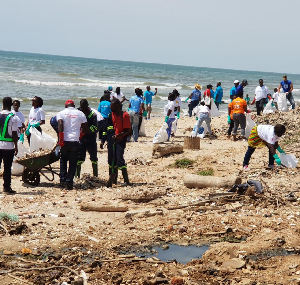
As Ghana continues to grapple with devastating floods that destroy homes, businesses and infrastructure every rainy season, engineering expert Engr. Dr. Dr. Gyamera Ankomah Ebenezer (PhD) is urging the country to rethink its approach to flood prevention.
According to him, while national clean-up exercises are important, they are not enough to solve Ghana's recurring flooding problem.
"A national clean-up exercise alone will not solve Ghana's flooding problem," he explains. "It can reduce flooding in some locations by clearing blocked drains, but it addresses only one part of a much larger challenge."
Flooding Goes Beyond Choked Drains
For many years, public discussions have focused on plastic waste and blocked gutters whenever floods occur. However, Dr. Gyamera believes this narrative overlooks deeper structural issues that continue to put thousands of Ghanaians at risk.
He notes that blocked drains are only one of several contributing factors. While removing plastic waste, silt and vegetation from drainage channels improves the flow of water and can reduce localized flooding, it does not eliminate the underlying causes.
One major concern, he says, is poor land-use planning. Across many parts of Ghana, buildings have been constructed on waterways, wetlands and natural floodplains. These developments block the natural path of floodwater, leaving rainwater with nowhere to flow during heavy storms.
He also points to inadequate drainage infrastructure. Many urban drainage systems were designed decades ago for much smaller populations and lower levels of development. Today, some drains are too narrow, disconnected, damaged or poorly maintained, while many fast-growing communities lack engineered drainage systems altogether.
Another challenge is the weak enforcement of planning regulations. Illegal construction on waterways and in flood-prone areas continues despite existing planning laws, making communities increasingly vulnerable.
Rapid urbanization has further worsened the situation. As vegetation is replaced by roads, concrete surfaces and buildings, less rainwater is absorbed into the ground. Instead, more water flows across the surface, quickly overwhelming existing drainage systems.
Adding to these challenges is climate change. Ghana is experiencing more frequent and more intense rainfall events, placing additional pressure on drainage infrastructure that was never designed to handle such volumes of water.
A National Strategy for Flood Resilience
Rather than relying solely on periodic clean-up campaigns, Dr. Gyamera advocates a comprehensive and long-term strategy to build flood resilience across the country.
He recommends regular maintenance of drainage systems throughout the year instead of seasonal clean-up exercises before the rains begin. He also calls for stricter enforcement of laws that prohibit construction on waterways, wetlands and other flood-prone areas.
According to him, Ghana must invest in expanding and modernizing urban drainage infrastructure using current engineering standards to meet the demands of rapidly growing cities.
He further recommends the implementation of a comprehensive national land-use policy supported by effective spatial planning to guide future development.
Improving solid waste management is equally critical. Preventing refuse from entering drains would significantly reduce blockages and improve water flow during heavy rainfall.
Dr. Gyamera also believes sustained public education is essential to discourage littering and illegal dumping, while flood-risk mapping and early warning systems can help communities prepare for extreme weather events before disaster strikes.
Protecting and restoring wetlands and natural waterways, he adds, should become a national priority because these ecosystems naturally store and slow floodwater, reducing pressure on urban drainage systems.
Looking Beyond Emergency Responses
As communities across Ghana continue to count the cost of annual floods, Dr. Gyamera says it is time to move beyond short-term emergency responses and embrace lasting solutions.
"A national clean-up exercise is necessary but not sufficient," he emphasizes. "It treats one symptom—blocked drains—but does not address the structural causes of flooding."
He believes lasting flood resilience will only be achieved by combining clean-up campaigns with sound engineering, responsible land-use planning, strict enforcement of regulations, environmental protection and responsible public behaviour.
His message offers a simple but powerful reminder for policymakers and citizens alike:
"Clean drains help water flow, but proper planning determines where the water goes. Without both, flooding will continue to threaten lives, livelihoods and property."
As Ghana faces increasing urban growth and changing weather patterns, experts agree that preventing floods requires more than annual clean-up exercises. It demands coordinated planning, sustained investment and a shared national commitment to protecting both people and the environment.

Copyright © 1994 - 2026 GhanaWeb. All rights reserved.










