



There are public officials who speak eloquently, and there are those whose work gradually speaks louder than their speeches. Every so often, one comes across a leader whose consistency becomes the story. Whether one agrees with every decision they make or not, their work ethic becomes difficult to ignore.
Growing up as a young journalist, I had the privilege of observing Ghana’s political landscape from close range. Covering political events, interviewing leaders, and reporting from party congresses gave me the opportunity to compare promises with performance. Over the years, I realized that while politics often changes people, a few individuals remain remarkably consistent in the values and style they project.
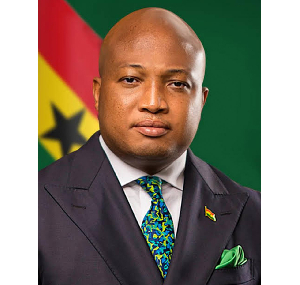
One of such personalities is Hon. Samuel Okudzeto Ablakwa, Ghana’s Minister for Foreign Affairs.
My first personal encounter with Hon. Ablakwa dates back to 2011 during the National Democratic Congress National Executive Committee meeting at the Ghana International Trade Fair Centre. At the time, I was working as a reporter and audiovisual editor with Skyy Digital Television.
The political atmosphere was charged. Rumours of misunderstandings between the late President Professor John Evans Atta Mills and former President the late Jerry John Rawlings dominated national discussions. During an exclusive interview, I noticed something that distinguished the young politician from many others I had interviewed.
He spoke with unusual confidence.
He defended his position with facts rather than insults.
He demonstrated respect, even when discussing controversial matters.
Above all, there was visible passion in the way he communicated.
At the time, I assumed it was simply the enthusiasm of a young politician trying to establish himself. Politics, after all, has a way of changing people.
Years later, I realized I was wrong.
From his successful campaign to represent the people of North Tongu, succeeding Hon. Charles Senam Hodogbey, through his tenure as Deputy Minister of Information, Deputy Minister of Education, years in Parliament, his period in opposition, his advocacy on public accountability, and more recently his involvement in initiatives aimed at promoting accountability in public governance, one thing has remained strikingly consistent—preparation.
Hon. Ablakwa rarely appears unprepared.
Whether addressing Parliament, granting media interviews, or presenting Ghana’s position on international issues, he often relies on documentation, timelines, and verifiable facts. In an era where political conversations can easily descend into rhetoric, this approach has become one of his defining characteristics.
Another quality that stands out is timing.
Good leadership is not only about making the right decisions; it is also about knowing when to act and when restraint serves the national interest better. Throughout his public life, Ablakwa has demonstrated an understanding that timing can determine whether a message builds confidence or creates unnecessary anxiety.
Since assuming office as Minister for Foreign Affairs, that same sense of urgency appears to have found expression in Ghana’s diplomacy.
The Ministry has pursued a more proactive engagement with Ghanaians living abroad, responding publicly to reports of unfair treatment where necessary and strengthening diplomatic engagement with partner countries. It has also sought to deepen bilateral cooperation through strategic agreements in areas such as education, trade, aviation, science, sports, technical cooperation, and investment.
Recent diplomatic engagements—including the signing of multiple cooperation agreements with Morocco, strengthened partnerships with countries across Africa and beyond, and efforts to expand economic diplomacy—reflect an approach that seeks to position foreign policy not merely as diplomacy for diplomats, but as a practical tool for national development.
For many Ghanaians in the diaspora, visible engagement from the Foreign Affairs Ministry has become a source of reassurance. Knowing that their government is prepared to engage foreign authorities on matters affecting their welfare helps reinforce confidence in Ghana’s diplomatic institutions and the rule of law.
Of course, no public official is beyond criticism.
Constructive criticism remains essential in every democracy because it strengthens institutions and improves governance. Public service should never be measured by perfection but by a willingness to learn, improve, and remain accountable.
Yet, it is equally important that society acknowledges dedication wherever it finds it.
Too often, our national conversations focus exclusively on failures while overlooking examples of discipline, preparation, and hard work that can inspire the next generation of leaders.
This is why the story goes beyond one individual.
It speaks to a principle.
When preparation meets opportunity, results begin to show.
When consistency replaces convenience, credibility grows.
When public office is approached with energy and purpose, citizens notice.
As a journalist who has watched many political careers evolve over the years, I have come to appreciate that consistency is one of the rarest qualities in public life. Positions may change, responsibilities may increase, and political fortunes may rise or fall, but maintaining the same level of commitment throughout the journey is no small achievement.
Perhaps that is the lesson young professionals, public servants, students, and aspiring leaders can take from this observation.
Whatever field we choose—journalism, teaching, engineering, business, law, medicine, or public service—our greatest asset is not merely talent.
It is consistency.
It is preparation.
It is the discipline to keep showing up with excellence, even when nobody is watching.
This is because when purpose meets hard work, people notice.
And sometimes, the work speaks louder than the worker.
That is what happens when Ablakwa decides to work.
visit neoreportgh.com for other details

Copyright © 1994 - 2026 GhanaWeb. All rights reserved.










