


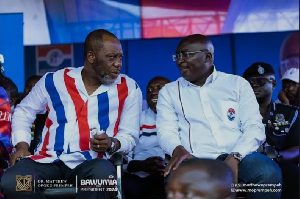
Ghana's gold management programme has become the subject of renewed public debate following a warning by former Vice President Dr Mahamudu Bawumia about the possible financial consequences of the current approach to gold purchases.
According to his remarks, Bawumia believes the Ghana Gold Board (GoldBod) could record further financial losses if it continues operating differently from the original Gold for Reserves programme introduced in 2021.
The NPP flagbearer explained that the original programme was designed to purchase gold from local miners and add it to Ghana's international reserves. He argued that the strategy was intended to strengthen the country's reserves and support the stability of the cedi.
Bawumia further referred to an August 2026 International Monetary Fund report, which reportedly estimated losses associated with the Domestic Gold Purchase Programme at more than $1.7 billion in 2025, equivalent to approximately GH¢22 billion.
He warned that the financial situation could become more serious if the programme continued under its current arrangement.
However, GoldBod Chief Executive Officer Sammy Gyamfi has disputed the suggestion that his institution has recorded losses. He has reportedly cited an operational surplus of GH¢900 million and an overall surplus of GH¢5.4 billion.
He has also argued that the IMF's concerns relate to the Bank of Ghana rather than GoldBod itself.
This disagreement has raised important questions about how Ghana's gold purchasing programme is being managed and how its financial performance should be measured.
While Bawumia believes the original reserve accumulation strategy should have been maintained, Sammy Gyamfi's position presents a different explanation of the institution's financial performance.
For ordinary Ghanaians, the major concern is how these financial decisions could affect the country's reserves, the cedi and the management of its gold resources.

Copyright © 1994 - 2026 GhanaWeb. All rights reserved.










