


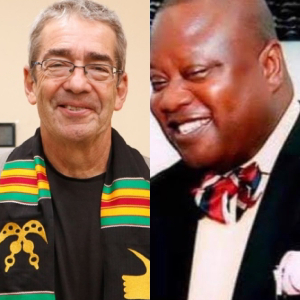
Permit me first to acknowledge your responsibility to defend Israel’s interests. An ambassador who does not defend his country would be rather like a lighthouse reluctant to shine. Your observations about Ghana deserve a thoughtful response. Friendship, after all, is not the absence of disagreement; it is the ability to disagree without putting friendship on trial.
Your own country has just held an important election. Israel’s political landscape, like its history, is anything but monochromatic. Its parties, religious and secular communities, Arab citizens and other constituencies represent divergent voices and competing visions. Some Israelis support their government’s policies, others question them, and still others would chart a different course. A government may speak for the State, but it does not possess a monopoly on the thoughts of its people.
This distinction matters. To question an Israeli government's policies is not to question Israel's right to exist. To disagree with its diplomatic position is not to express hostility towards its people. The same courtesy must be extended to Ghana.
On October 16, 2026, you questioned Ghana’s apparent reluctance to criticise Russia over its invasion of Ukraine, contrasting it with Ghana’s more vocal position on Israel and Palestine. You were quoted as saying: “On the Ukraine-Russia conflict, Ghana is very much non-aligned. We don’t hear much criticism of Russia for their aggression against Ukraine.”
I deliberately waited before responding. I wanted to see whether President John Dramani Mahama would follow through on his intention to engage Vladimir Putin in the search for peace. Sometimes, events deserve the first word.
At the Russia-Africa Summit in Moscow on October 29, Mahama welcomed Putin’s willingness to resume trilateral talks, calling for a lasting peace agreement and security for both Russia and Ukraine. This does not mean the war is ending, nor does engagement amount to endorsement. A hand extended across a negotiating table is not a flag of surrender. Diplomacy, like statesmanship, must sometimes venture where armies cannot.
Ghana Did Not Whisper Its Condemnation
Ghana condemned Russia’s invasion at the United Nations in 2022, defended Ukraine’s sovereignty and territorial integrity, and called for Russian forces to withdraw.
Ghana’s Permanent Representative, Ambassador Harold Agyeman, offered a memorable observation: “It takes true friendship to be candid with one another, on matters of principles and values.”
That was neither silence nor evasion. Ghana had spoken. Diplomacy is not always a brass band; sometimes its most consequential work is conducted in quieter rooms.
Consistency Does Not Mean Uniformity
Ukraine and the Middle East have different histories, circumstances and legal dimensions. Russia’s invasion raises questions of sovereignty and territorial integrity. The Israeli-Palestinian conflict involves self-determination, occupation, settlements and civilian protection.
To demand identical language for different conflicts is to confuse consistency with uniformity. A physician does not prescribe the same medicine for every illness merely to demonstrate consistency.
Ghana can be a friend of Russia without endorsing its invasion. It can be a friend of Israel without ignoring Palestinian suffering. It can condemn aggression without abandoning dialogue, and pursue peace without surrendering principle.
Hamas’s attacks on Israeli civilians deserve unequivocal condemnation; the suffering of Palestinian civilians demands equal moral seriousness. Ghana’s support for a two-state solution rests on a simple conviction: neither people should have to purchase its security with the permanent insecurity of the other.
Ghana Has Its Own Compass
Our Constitution supplies the compass. Article 40 directs Government to protect Ghana’s interests, promote respect for international law and treaty obligations, and support peaceful settlement of disputes to accord with public international law and diplomacy, consistently with the national interest.
These are not constitutional wallpaper. They are instructions for navigating a complicated world.
Ghana must protect its interests without disregarding international law; maintain friendships without surrendering judgment; and pursue peace without compromising principle. It must be candid without being quarrelsome, independent without being indifferent, and diplomatic without being submissive.
A Final Word, Ambassador
Ghana values its relations with Israel, as it does those with Russia and other nations. We respect Israel’s right to defend its interests. We ask for equal respect for Ghana’s right to defend its own.
Friendship does not require silence. Dialogue does not demand agreement. Independence does not mean indifference.
As the old lesson of international diplomacy reminds us, sovereignty is not a privilege granted by powerful friends. It is a responsibility exercised by nations themselves.
Our friendships are many; our obligation to principle must be one.
That is not hostility towards Israel, Ambassador. It is the independence of Ghana.
---
About the Author
Seth Kwame Awuku is a Ghanaian legal scholar, writer and public policy commentator focusing on constitutional law, governance and the relationship between law and public power. He is Principal of Sovereign Advisory Ltd, Takoradi.

Copyright © 1994 - 2026 GhanaWeb. All rights reserved.










