



There is a curious assumption creeping into our conversation about legal vacation. When lawyers go on vacation, must justice pack its bags and leave with them? And when did treating different cases differently become discrimination?
Hon. Kojo Oppong Nkrumah has taken the Chief Justice to the Supreme Court, challenging the decision to allow selected criminal cases to proceed during the legal vacation. He describes the arrangement as “selective justice.”
It is a serious charge. But seriousness alone does not make an argument correct.
Prof. Kwaku Asare has already raised formidable questions about the constitutional foundations of the suit, particularly whether treating different cases differently can, without more, amount to discrimination. His analysis deserves serious attention.
But there is a larger question here.
If two cases are treated differently, must that necessarily mean that someone has been discriminated against?
Of course not.
A hospital does not discriminate when it treats the patient bleeding from an artery before the patient with a headache. It is exercising judgment about urgency.
Courts must do the same.
Cases are not identical. Some are old. Some involve accused persons in custody. Some are ready for trial. Others are not. Some require urgency; others can wait.
The fact that Case A is heard while Case B waits therefore proves very little.
So what lawful principle determined the difference?
This is where interpretation matters.
Ruth Sullivan’s approach to statutory interpretation cautions us against plucking convenient words from legislation and marching them towards a predetermined conclusion. Text must be read in context. Purpose matters. The law must be understood as a coherent whole.
The work of Ghanaian jurists and scholars, including Justice Dennis Adjei, similarly reminds us that interpretation is not a treasure hunt for convenient words. It is an inquiry into what the law means and what it is designed to achieve.
So what is the purpose of legal vacation?
Is it to stop the courts from working altogether? Is it a holiday for lawyers? Or is it simply a period of reduced judicial activity that still leaves room for matters requiring attention?
The question is not merely theoretical. In July 2024, Justice Enyonam Adinyira called for the scrapping of legal vacation, pointing to the backlog of cases before the Superior Courts.
That is worth thinking about.
Lawyers and judges, like everyone else, need rest. Of course they do. But must the machinery of justice itself take a holiday?
Surely legal vacation cannot mean putting justice behind a locked door until the calendar permits its return.
Justice does not take a vacation merely because the courts are on vacation.
But let us not go too far in the other direction.
The Chief Justice does not possess a constitutional blank cheque.
Discretion is not immunity.
Article 296 requires discretionary power to be exercised fairly and without arbitrariness, caprice or bias. If cases were selected because of political affiliation, personal favour or some improper purpose, there would be a serious constitutional question.
But there is a difference between saying that discretion must be lawful and saying that discretion cannot exist.
Selective treatment is not necessarily selective justice.
And there is another person in this debate whose interests deserve more than a footnote: the accused.
The Constitution guarantees an accused person a fair hearing within a reasonable time.
Imagine telling someone who has been waiting years for trial, “Your case must wait. The lawyers are on vacation.”
What happens to his liberty while his lawyer takes a holiday?
That question brings constitutional interpretation down from the lecture hall and into real life.
Behind every delayed case is a human being. There is the accused, whose liberty and reputation may hang in the balance. There is the victim, waiting for an answer. There are witnesses whose memories fade. There are families living with uncertainty.
A case is not merely a file sitting on a judge’s desk.
It is someone’s life.
For years, Ghanaians have complained about judicial delay. Cases linger. Witnesses disappear. Memories fade. Litigants grow old waiting for judgments.
Then the Judiciary attempts to use available time to move some cases forward, and suddenly we ask whether justice has moved too quickly.
There is an irony here.
We complain that justice is slow.
Then we complain when it moves.
We cannot sensibly demand both.
Of course, the Chief Justice must remain accountable. Judicial administration is not beyond scrutiny. But scrutiny requires evidence.
If the selection of cases was arbitrary or biased, let the evidence establish it.
If it was based on legitimate considerations, urgency, readiness, the age of cases, accused persons in custody, or the reduction of delay, then differentiation alone cannot magically become discrimination.
Perhaps, therefore, we are asking the wrong question.
Not, “Why are these cases being heard during vacation?”
But, “Was there a lawful and impartial reason for hearing them?”
That is the constitutional question.
And perhaps there is a larger lesson.
A legal system must never become so fascinated with its procedures that it forgets the people for whom those procedures exist.
The courtroom is not a monument to the calendar.
It is where citizens come for justice.
A vacation may belong to the calendar. Justice belongs to the citizen.
And when justice is waiting, perhaps the calendar should be the thing that waits.
---
About the Author
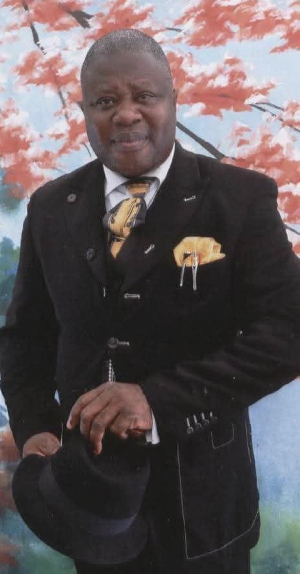
Seth K. Awuku is a legal scholar and public affairs commentator. He is the Principal of Sovereign Advisory Ltd., a Ghana-based advisory and consultancy firm. His commentary focuses on law, constitutionalism, governance, public affairs and the relationship between institutions and society.

Copyright © 1994 - 2026 GhanaWeb. All rights reserved.










