



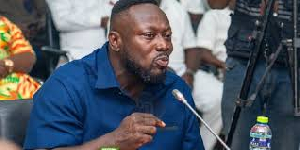
On January 22, 2025, George Oparebea Addo, the Minister-designate for Youth Development and Empowerment, appeared before Parliament's Appointment Committee for his vetting. Among the various questions posed to him, one query by the Minority Leader, Honorable Alexander Afenyo-Markin, has sparked considerable public debate.
During the session, Afenyo-Markin asked, “You have indicated membership of bodies and associations. Are you a Freemason?” To this, Addo replied candidly, “Yes, I am a Mason.” This response immediately drew murmurs of intrigue and speculation from observers, both within and outside the parliamentary chambers.
Afenyo-Markin followed up with a spiritually charged question: “In difficulties and dangers, in whom do you place your trust?” Addo’s response, “The Grand Architect of the Universe,” has since become a focal point for public discourse, raising questions about the interplay between Freemasonry, religious beliefs, and Ghanaian cultural perceptions.
The Grand Architect of the Universe: Freemasonry’s Supreme Being
The term “Grand Architect of the Universe” (GAOTU) is a central tenet in Freemasonry, referring to a supreme being or creator. In Masonic traditions, it is intentionally inclusive, allowing members from diverse religious backgrounds to unify under a shared concept of divinity. While Christians may equate the GAOTU to the God of the Bible, other Masons may interpret it differently based on their faiths.
This nuanced definition has led to debates in Ghana, a deeply religious country where Christianity dominates and Islam holds a significant presence. Many Ghanaians perceive Freemasonry as an occult society, shrouded in secrecy and associated with unorthodox spiritual practices. Consequently, Addo’s public admission of being a Freemason and his reference to the GAOTU have fueled suspicions and raised questions about his spiritual and moral allegiance.
Christianity in Ghana: The Lens Through Which Freemasonry Is Viewed
Christianity forms the backbone of Ghanaian religious identity, with over 70% of the population identifying as Christian. Many Christians adhere to a literal interpretation of the Bible, which often includes a rejection of secret societies. Passages such as Ephesians 5:11 (“Have nothing to do with the fruitless deeds of darkness, but rather expose them”) are frequently cited in opposition to organizations like Freemasonry.
For Ghanaians, Christianity’s emphasis on transparency, community worship, and direct allegiance to God contrasts sharply with the secretive nature of Masonic rituals and symbols. Freemasonry’s use of the term “Grand Architect of the Universe”, while appearing neutral, is viewed with suspicion as a potential attempt to dilute or replace the Christian concept of God. This cultural and religious backdrop intensifies the scrutiny faced by public figures like Addo who openly identify as Freemasons.
Is Freemasonry an Occultic Society?
The question of whether Freemasonry is occultic has long been a subject of global debate, and in Ghana, the term “occult” is often associated with secretive, mystical practices that are at odds with mainstream religious beliefs. Critics argue that the organization’s emphasis on allegory, symbolism, and secret rituals mirrors the characteristics of occult societies.
However, proponents of Freemasonry, including many of its members, refute this characterization. They describe the fraternity as a philosophical organization focused on self-improvement, charity, and moral uprightness. Freemasons argue that their practices are neither religious nor occultic but rather serve as a complement to one’s personal faith. Despite these assurances, the widespread lack of understanding about Freemasonry’s inner workings continues to fuel public mistrust in Ghana.
The Public Reaction and Implications for Leadership
Following Addo’s statements, social media platforms and radio discussions have been inundated with commentary. Some Ghanaians have expressed concern that his Masonic ties could influence his decisions as a public servant, given the perceived secrecy and exclusivity of the fraternity. Others have questioned whether his reference to the “Grand Architect of the Universe” aligns with Ghana’s predominantly Christian values.
“Can someone who places his trust in the Grand Architect of the Universe truly represent a nation that worships the God of the Bible?” one radio caller asked, reflecting the sentiments of many.
On the other hand, some have defended Addo, arguing that Freemasonry’s principles of integrity, charity, and service align with the qualities expected of a leader. They contend that his membership in the fraternity should not overshadow his qualifications or ability to serve the nation.
Balancing Faith, Leadership, and Public Perception
In a country where faith and politics often intersect, Addo’s vetting underscores the challenges faced by public figures in reconciling personal beliefs with societal expectations. For many Ghanaians, the idea of a leader affiliating with Freemasonry—an organization seen by some as antithetical to Christian values—is difficult to accept.
As the debate continues, it raises broader questions about religious tolerance, freedom of association, and the role of faith in governance. Should a leader’s personal spiritual affiliations matter if they are committed to serving the nation with integrity? Or does public office demand adherence to the dominant cultural and religious norms?
For George Oparebea Addo, these questions may shape not only his political career but also the ongoing dialogue about faith, identity, and leadership in Ghana. His response to the vetting committee has undoubtedly stirred a national conversation, one that reflects the complexities of navigating personal beliefs in a religiously diverse yet predominantly Christian society.



Copyright © 1994 - 2025 GhanaWeb. All rights reserved.










