


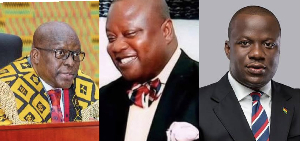
In an earlier article, “Speak with Passion, Speak Respectfully: The Case for Decorum in Ghana’s Parliamentary Democracy,” I argued that Parliament’s strength lies not merely in the volume of its arguments, but in the quality, discipline and responsibility with which they are advanced. The recent confrontation between Speaker Alban Bagbin and MP Samuel Abu Jinapor brings that argument into sharp focus.
Jinapor reportedly alleged that diplomatic passports were being sold for between US$10,000 and US$50,000, claiming to possess compelling evidence and directing his accusation at the Foreign Affairs Minister. These are serious allegations deserving serious investigation.
But in Ghanaian politics, an allegation often travels first class while the evidence is still waiting at the trotro station. The accusation makes the headlines, outrage gathers an audience, and the facts are left struggling to catch up. Parliament, however, cannot operate by the rules of the political marketplace, where accusation is currency and outrage is mistaken for proof.
The Standing Orders of Parliament, adopted on 27 June 2023, leave little room for procedural ambiguity. Order 123 governs the content of parliamentary speech, expressly prohibiting offensive language, imputations of improper motives and attacks on the integrity of members or other persons. It empowers the Speaker to demand withdrawal, an apology and, where appropriate, the expunging of offending words from the parliamentary record. Order 124 provides a further mechanism where a member refuses to comply. Order 126 expressly places responsibility for maintaining order and the rules of debate on the Speaker, requiring the House to hear the Chair in silence. Orders 129 and 131 address persistent disorder and defamatory statements respectively. These provisions are not designed to muzzle Parliament; they are designed to ensure that freedom of debate does not become freedom from responsibility.
The Constitution reinforces this institutional responsibility. Article 101 provides that the Speaker shall preside at all sittings of Parliament. This is no decorative constitutional ornament. Presiding means more than occupying the Chair; it means ensuring that proceedings follow the rules that enable the House to function.
A traditional drum ensemble may have many gifted drummers, but without a common rhythm, music can quickly become a cacophony of competing beats. Parliament, too, needs vigorous voices, but it must also have an authority capable of keeping the rhythm.
The Speaker is not a referee whose whistle is required only when the opposing team complains. He is the custodian of the House's proceedings. His responsibility is to protect the right to speak without surrendering the authority to maintain order. A Chair whose authority is routinely disregarded risks becoming little more than a piece of parliamentary furniture; a Parliament that cannot discipline itself risks becoming a shouting match with microphones.
Our parliamentary history offers illustrations. In 2019, First Deputy Speaker Joseph Osei-Owusu ordered Tamale North MP Alhassan Suhuyini out following disorder surrounding the 'Bloody Widow' placards directed at Lydia Alhassan. In 2024, Speaker Bagbin ordered Sefwi-Wiawso MP Kwaku Afriyie out over remarks he considered contemptuous. In 2012, Speaker Joyce Bamford-Addo removed Adenta MP Kojo Adu Asare over improper dressing. These incidents illustrate that parliamentary privilege and discipline are complementary, not competing, principles.
When Bagbin directed Jinapor to withdraw his allegation, he was exercising the authority of the Chair under the Standing Orders, within the constitutional responsibility established by Article 101. The question is whether the rules were properly applied, not simply whether members welcomed the intervention.
Serious allegations must never be silenced merely because they are uncomfortable. Members must expose wrongdoing, demand explanations and ins

Copyright © 1994 - 2026 GhanaWeb. All rights reserved.










