


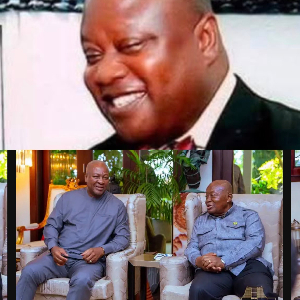
There was something rather refreshing, almost disarming, about watching President John Dramani Mahama visit former President Nana Akufo-Addo.
The handshake, the warm exchange of courtesies and, above all, the sight of the two men sitting comfortably on Akufo-Addo’s couch, chatting in a relaxed atmosphere, beamed into our living rooms on national television. For many Ghanaians, it was a welcome spectacle.
For a moment, politics took a back seat and humanity occupied the front row. No accusations, no recriminations, no political theatre. Just two former adversaries sharing a moment of civility. It was a reminder that beneath the armour of political rivalry, there is still room for human decency.
And therein lies the lesson.
One book that often comes to mind when I observe Mahama’s public approach to human relations is Dale Carnegie’s timeless classic, How to Win Friends and Influence People.
Carnegie reminds us that human relations are built on empathy, restraint and respect for human dignity. You do not have to humiliate someone to make your point, win every argument to demonstrate superiority, or destroy a relationship because of disagreement. Sometimes, wisdom lies in knowing when to disagree, when to let go and when to leave the door open for tomorrow.
The encounter brings back memories of a rather different political atmosphere during Akufo-Addo’s presidency. Mahama was frequently subjected to harsh criticism and public castigation. We remember the Airbus affair, the repeated taunts about his inability to secure a second presidential term, and the declaration that he would remain Ghana’s only one-term president. There was also the controversy surrounding his former-presidential entitlements, including complaints about having to pay his own electricity and water bills.
Yet here we are. Mahama walks into Akufo-Addo’s home, shakes his hand and sits comfortably on his couch. No public score-settling, no recital of old grievances, no attempt to reopen yesterday’s political battles.
What I find particularly instructive is that Mahama does not appear to have allowed yesterday’s public humiliations to become the permanent measure of his relationship with Akufo-Addo. He seems willing to look beyond the political bruises, recognise the person beyond the political adversary and make room for the positive aspects of their relationship. It is easy to remember an injury; it takes a different kind of maturity not to make that injury the foundation of every future encounter. If we see people only through the darkest chapters of our shared history, we may never discover that brighter pages remain to be written.
There is an art to human relations that seems increasingly lost in our political culture: the ability to disagree without becoming disagreeable, criticise without destroying and compete without stripping another person of dignity.
Never mistake today's political advantage for permanent superiority. Political fortunes are like the waves of the Atlantic, rising and falling with the tide. The man you ridicule today may occupy the highest office tomorrow; the opponent you humiliate today may be the very person whose goodwill you will appreciate in another season.
This is not an argument for political amnesia. Accountability must never be confused with vindictiveness, nor should civility become an excuse for avoiding difficult questions. We can defend our convictions fiercely and demand accountability without turning political opponents into personal enemies.
Perhaps some members of our Minority in Parliament might take a cue from this encounter. Opposition is indispensable to democracy, but it need not become a permanent state of hostility. One can be fierce in argument, uncompromising in principle and robust in criticism without abandoning common courtesy.
Parliament should be a theatre for the contest of ideas, not an arena for the destruction of personalities.
I have always believed that one of the greatest tests of character is how we treat people when circumstances favour us. It is easy to be courteous when we need someone's favour; it takes wisdom to remain courteous when we have the power to withhold ours.
Never destroy a person in public simply because you have the power to do so today. Never close a door simply because you do not need it today. And never clutch yesterday's grievances so tightly that you have no hands left to welcome tomorrow.
Mahama's visit offers us a moment to reflect on the Ghana we want to build: a Ghana where leaders can fight hard on matters of principle but shake hands afterwards; disagree without despising and compete without humiliating.
Political power is temporary. Human relationships, dignity and the memory of how we treated one another can endure long after the highest office has been vacated.
That is the art of human relations. That is the grace of leadership.
---
About the Author
Seth K. Awuku is a Ghanaian legal scholar, writer and public policy commentator. He is Principal of Sovereign Advisory Ltd, Takoradi, and writes on law, governance, democracy and public affairs.

Copyright © 1994 - 2026 GhanaWeb. All rights reserved.










