



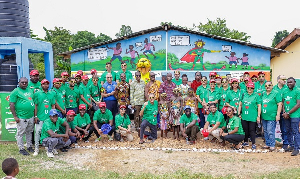
Pupils of Tetekasum B/A School in Suhum are experiencing a healthier, safer learning environment thanks to a new initiative by Unichem Ghana, manufacturer of Africa’s most widely used dewormer, WORMBAT.
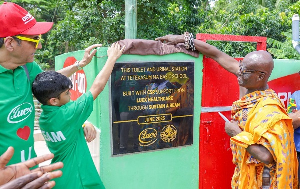
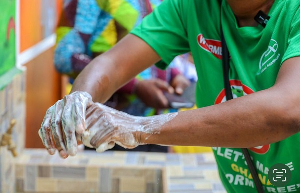
The company has commissioned a three-unit toilet block, urinals, a borehole, and handwashing stations at the school — facilities paired with hygiene education that teachers say are already improving pupil health and classroom performance.
The project marks a deliberate shift in Unichem’s Corporate Social Responsibility (CSR) approach, moving beyond short-term donations to long-term investments in public health.
Tackling a Persistent Health Challenge
Parasitic worm infections remain one of Ghana’s most widespread health burdens. In Suhum Municipality alone, the Ghana Health Service recorded 4,443 diarrhoeal cases and 2,323 worm-related infections among children aged 0–14 in 2024.
Though rarely fatal, these infections deplete nutrition, stunt growth, and keep children out of school, with ripple effects on household productivity and local economies. Experts estimate that more than 70% of Ghanaian children are at risk.
Unichem Ghana has long supplied affordable WORMBAT across the country. But company leaders say medicine alone cannot break the cycle of reinfection if children return to unsafe water and unhygienic facilities.
“You can’t deworm a child and then send them back to contaminated water,” said Unichem Ghana’s Executive Chairman, Sir Raju Mohan. “We must finish the system — treatment, prevention, and dignity.”
Impact Already Visible
Teachers at Tetekasum B/A School report that pupils are now healthier and more attentive. Parents say their children are missing fewer school days, while community leaders hailed the project as “a restoration of dignity.”
“When children are healthy, they learn better,” noted Madam Joyce Ashietey Karley, Head of Planning and Statistics at the Ghana Education Service in Suhum. “This project is not just about toilets and clean water — it is about keeping our pupils in school, focused, and ready to succeed.”

A Model for CSR in Ghana
What sets Unichem’s strategy apart is its integration of medicine, infrastructure, and hygiene education, aligned with both national and international health frameworks.
“This approach is directly in line with Ghana’s WASH-for-Health strategy and WHO guidelines,” said Suhum Municipal Health Director, Mr. Frederick Kwame Ofosu. “Government alone cannot solve these problems. When private companies invest strategically like this, we move faster as a country.”
National and Global Alignment
Unichem’s initiative advances multiple Sustainable Development Goals, including:

SDG 3: Good Health and Wellbeing — reducing worm infections and diarrhoeal disease.
SDG 4: Quality Education — cutting absenteeism due to illness.
SDG 6: Clean Water and Sanitation — providing boreholes, toilets, and hygiene facilities.
By embedding CSR in its pharmaceutical expertise and nationwide networks, Unichem Ghana has created a replicable model that demonstrates how private companies can make measurable, lasting contributions to public health.



Copyright © 1994 - 2025 GhanaWeb. All rights reserved.










