



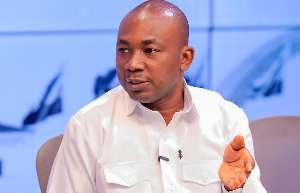
 Godfred Alufar Bokpin is a Professor of Finance at the University of Ghana
A Professor of Finance at the University of Ghana, Professor Godfred Alufar Bokpin, is advising caution regarding sustainability of fiscal reforms, stating that the 2026 National Budget fails to articulate a clear strategy for maintaining discipline once the country exits the International Monetary Fund (IMF) programme in the middle of next year.
Speaking at the annual Deloitte Economic Dialogue held recently, Prof. Bokpin identified the absence of a defined post-programme path as the primary risk to budget objectives, arguing that it leaves the economy vulnerable to the cyclical fiscal indiscipline that has historically followed periods of IMF-supported stability.
“Is there going to be a technical extension of about three months, as we have seen with Zambia and the like?” Prof. Bokpin queried. Prof. Bokpin said in this referencing the nation’s history of reverting to excessive spending and money-printing once external supervision is lifted.
He also delivered a stringent critique of the current administration’s expenditure execution; arguing that resources are being allocated sub-optimally, even under the pressure of fiscal consolidation.
Prof. Bokpin highlighted that government revenue shortfalls often lead to immediate cuts in budgeted spending to avoid recourse to high-cost borrowing. While this approach signals prudence, it creates significant delays in vital infrastructure projects and leads to poor resource utilisation.
He cites data from the 2025 budget which allocated approximately GH¢33billion to Capital Expenditure (CAPEX) but only achieved an execution rate of roughly 55 percent.This disparity, he argued, indicates that the state is “not spending and allocating resources optimally” – thereby sacrificing growth that should accompany the current period of macroeconomic stabilisation.
The finance expert further criticised escalating institutional costs of implementing government policies, which he attributed to structural duplication across the public sector.
Meanwhile, civil society organisation (CSO) SEND Ghana’s analysis of the 2026 budget commended government for its “renewed effort to enhance development and reduce inequalities”.
“The 2026 budget analysis is a reminder that more must be done to ensure social sector spending translates into real improvements in wellbeing, inclusion and dignity for all Ghanaians.”
The CSO praised incentives for teachers in rural areas and value-addition in agriculture, however the CSO pointed pointed to “persistent gaps in service delivery, inequitable access and inconsistent funding flows” as barriers to implementing initiatives.
It also welcomeed the plans to construct hundreds of new schools and teacher-bungalows, celebrating government’s move to give 20 percent allowance for teachers in rural schools – sating this is victory for advocates and a direct response to SEND Ghana’s campaign.

Copyright © 1994 - 2026 GhanaWeb. All rights reserved.










