



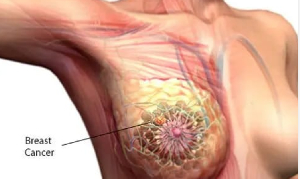
 Yearly deaths from the disease are projected to surge 44%
New breast cancer cases among women are predicted to rise by a third globally to more than 3.5 million by 2050, up from 2.3 million in 2023, despite recent advancements in treatment.
Similarly, yearly deaths from the disease are projected to surge by 44 percent, rising from around 764,000 to 1.4 million. The impact is expected to be disproportionately higher in countries with limited resources, according to a major new analysis by the Global Burden of Disease Study Breast Cancer Collaborators published in The Lancet Oncology on Monday.
The findings suggest that maintaining a healthy lifestyle, including not smoking, engaging in sufficient physical activity, reducing red meat consumption, and maintaining a healthy weight, may prevent more than a quarter of healthy years lost to illness and premature death due to breast cancer worldwide.
Lead author Kayleigh Bhangdia from the Institute for Health Metrics and Evaluation (IHME) at the University of Washington said, “Breast cancer continues to take a profound toll on women’s lives and communities.”
“While those in high-income countries typically benefit from screening, more timely diagnosis, and comprehensive treatment strategies, the mounting burden of breast cancer is shifting to low- and lower middle-income countries where individuals often face later-stage diagnoses, more limited access to quality care, and higher death rates that are threatening to eclipse progress in women’s health.”
Using data from population-based cancer registries, vital registration systems, and interviews with family members or caregivers of women who have died from breast cancer, the new analysis provides an updated global, regional, and national assessment of the female breast cancer burden and risk factor estimates from 1990 to 2023 in 204 countries and territories, with projections extending to 2050.
Importantly, the study also estimates the number of healthy years of life lost by women with breast cancer due to illness, disability, and premature death.
“With more than a quarter of the global breast cancer burden linked to six modifiable lifestyle factors, there are tremendous opportunities to alter the trajectory of breast cancer risk for the next generation,” said co-senior author Marie Ng, Affiliate Associate Professor at IHME and Associate Professor at the National University of Singapore.
“Targeting known risk factors through public health policies and making healthier choices more accessible, while working with individuals to take action to reduce obesity and high blood sugar, is crucial to halting the rise in breast cancers worldwide.”
Even with the best prevention policies, millions of women will still develop breast cancer, making the need to close the care gap an urgent priority.
The authors stress that with equitable access to care in low-resource settings, investment in innovative therapies, and strong political will, there is an opportunity to ensure that all women have an equal chance to overcome breast cancer.
As Lisa Force, co-senior author from IHME, explained: “Collaborative efforts are needed to ensure well-functioning health systems capable of early diagnosis and comprehensive treatment of breast cancer in all countries.”
“Reducing the cost of breast cancer therapies and ensuring that universal health coverage includes essential breast cancer care would also help protect patients from catastrophic costs and improve outcomes.”
While the study uses the best available data, the authors note that the estimates are constrained by a lack of high-quality cancer registry data, particularly in countries with limited resources. This highlights the need for increased investment in cancer surveillance systems.
They also note that information on cancer stage at diagnosis and subtype was not included in the analysis due to data limitations, despite their distinct survival patterns and resource implications. In addition, the analysis does not examine the impact of the COVID-19 pandemic or recent conflicts on the disease burden.
Writing in a linked comment, Yeon Hee Park from the Sungkyunkwan University School of Medicine in Seoul, South Korea, who was not involved in the study said, “Without ethnic or genetic ancestry data, the study cannot distinguish whether observed regional differences reflect genetic predisposition, environmental exposures, healthcare disparities, or combinations thereof.”
“Despite these limitations, this study provides a necessary foundation for global health planning. With appropriate refinements, particularly ethnic and genetic ancestry stratification that acknowledges the distinctive molecular signatures of African, Asian, and other ethnic populations, this study can achieve its goal of informing evidence-based cancer control strategies worldwide.”



Copyright © 1994 - 2026 GhanaWeb. All rights reserved.










