



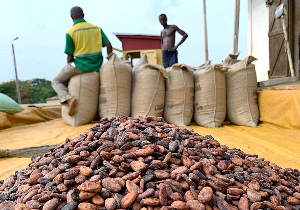
 Cocoa is a key export commodity for Ghana
The Ghana Cocoa Board (COCOBOD) has issued a strong warning to Licensed Buying Companies (LBCs) against purchasing cocoa beans from farmers on credit, cautioning that companies that continue the practice risk losing their operating licences.
The directive, announced by COCOBOD Chief Executive Officer, Dr Randy Abbey, forms part of a broader strategy to improve liquidity in the cocoa purchasing system, speed up payments to farmers and address longstanding financing challenges within the sector.
Speaking at the launch of the Chamber of Cocoa Marketers, Dr Abbey said COCOBOD had formally notified all LBCs that buying cocoa without making immediate payment to farmers violates the terms of their operating licences.
“We are not withdrawing anybody’s licence. But we have written to the effect that if it happens again, your licence will be revoked because it is against the terms of your licence,” he said.
The warning comes as COCOBOD prepares to implement a new financing framework for the 2026/27 crop season, which is expected to transform how cocoa purchases are funded.
Farmers urged to reject credit transactions
Dr Abbey stressed that the responsibility for enforcing the directive does not rest solely with buying companies.
He urged cocoa farmers to avoid handing over their produce without receiving payment, insisting that such arrangements undermine efforts to improve efficiency across the cocoa value chain.
“We have also told the farmers that LBCs are not supposed to buy cocoa on credit from you. So don’t go and take your cocoa to any purchasing clerk on credit,” he said.
The practice of purchasing cocoa on credit has become increasingly common in recent years as many LBCs have struggled with financing constraints.
Industry players say delayed reimbursements and limited access to working capital have made it difficult for several companies to maintain smooth purchasing operations, forcing some to rely on informal credit arrangements with farmers.
New financing model to improve liquidity
According to Dr Abbey, the new funding arrangement scheduled to take effect in the upcoming crop year is designed to ensure that sufficient funds are available throughout the season to support cocoa purchases and related activities.
He said one of the key objectives of the reforms is to eliminate payment delays that have affected the operations of licensed buyers since 2020.
“The new funding model is to ensure sufficient liquidity for cocoa purchases and related operations all year round,” he said.
“Hence, beginning the 2026/27 crop year, we hope to eliminate the delays in the payment of cocoa-taking-over receipts, which have been the bane of LBCs since 2020.”
Industry analysts believe that improving liquidity could significantly reduce the financial burden on buying companies, many of which have accumulated substantial debts to commercial banks.
COCOBOD expects the reforms to shorten the turnaround time for cocoa purchases, improve operational efficiency and strengthen the financial sustainability of cocoa marketing.
Part of broader sector reforms
The latest measures form part of wider reforms contained in the proposed Ghana Cocoa Board Bill 2026, which seeks to restructure the cocoa industry and strengthen support for farmers.
Dr Abbey said the legislation guarantees cocoa farmers 70 percent of the gross Free On Board (FOB) value of their produce while also allowing producer prices to be reviewed during the crop season in response to changing market conditions.
He argued that the reforms represent a significant turning point for Ghana’s cocoa sector.
“These measures and the new bill constitute the most significant reforms to our industry since 1984,” he said.
“These reforms are resetting the cocoa sector for growth and industrialisation.”
Beyond improving cocoa purchases, COCOBOD believes the reforms will also strengthen local processing by ensuring that domestic processors have better access to cocoa beans.
With financing challenges, declining production and disease outbreaks continuing to affect the industry, the success of the new measures is expected to play a critical role in determining the performance of Ghana’s cocoa sector during the 2026/27 season.

Copyright © 1994 - 2026 GhanaWeb. All rights reserved.










