



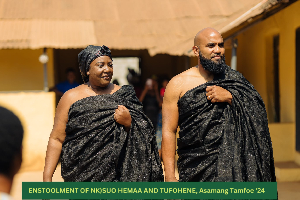
 The enstoolments of Nkosua Hemaa Ama Bemponmaa, and Tufohene Kofi Opong Kofoh
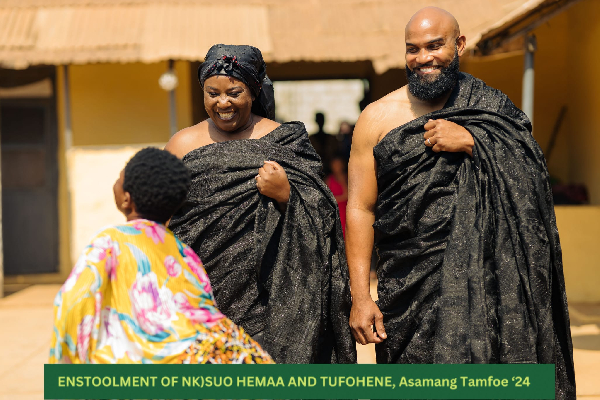
A couple who traced their heritages to Ghana but reside in Canada, has been installed as Nkosuo Hemaa and Tufohene of Asamang Tamfoe, near Anyinam, in the Atewa East District of the Eastern Region.
Janice John-Mitchell, as the new Nkosuo Hemaa, with the stool name Ama Bemponmaa, will be responsible for the development of the area, together with her husband, Ryan Mitchell, who, as Tufohene, with the stool name, Kofi Opong Kofoh, will serve as advisor to the chief and his elders, and also has the responsibility of settling disputes among the people.
In a brief profile about Janice during her enstoolment on December 15, 2024, conducted by Osaberima Kwame Kuoh II, the Chief of Asamang Tamfoe, she was described as someone with an unwavering commitment to fulfilling the wishes of her forebears.
“Janice's journey towards this esteemed position began with a deep-seated desire to reconnect with her roots and learn the language of her ancestors. This aspiration led to a fruitful relationship with a tutor dedicated to Janice and her family’s heritage. Her unwavering commitment to fulfilling the wishes of her forebears, particularly the yearning to return to the motherland, ultimately culminated in her enstoolment as Nkosuo Hemaa,” a statement said.
The significant, joint event, which Janice shared with her husband, Ryan, on the same day, has also been described as a distinctive arrangement, although it is not without precedent.
“Both Janice and Ryan possess Ghanaian heritage, although Ryan and Janice hail from Trinidad and Tobago, and the couple currently reside in Canada,” the statement added.
In attendance at the event were community members, even as Osaberima Kwame Kuoh II, the Chief of Asamang Tamfoe, led the couple through the ceremony.
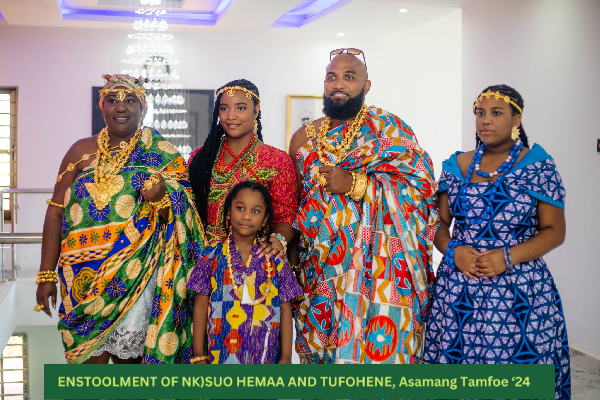
The couple were accompanied by their three children and friends.
In recent years, there has been a growing trend of Black people, particularly those in the African diaspora, tracing their heritage or ancestry to Ghana. This interest has been fueled by several key factors, including the "Year of Return" in 2019, during which Ghana made a significant push to connect with the African diaspora, marking 400 years since the first enslaved Africans were brought to the United States; ancestry testing, due to the rise of DNA testing services like Ancestry.com, 23andMe, and African Ancestry, which has allowed more Black people, particularly in the U.S. and the Caribbean, to use genetic tests to trace their African heritage; and cultural and historical reconnection, through which Ghana has positioned itself as a cultural and historical hub for Africans in the diaspora.
Other factors have been the African renaissance and pan-Africanism, and return migration, even as more people trace their ancestry to Ghana, with some choosing to return permanently or semi-permanently, contributing to a phenomenon of "return migration."
Overall, the trend of tracing heritage to Ghana is part of a larger movement of reclaiming African identities and strengthening the connection between the African continent and the diaspora.
Through these efforts, people are reconnecting with the shared history, culture, and heritage of the African continent, while also finding opportunities for community-building and self-discovery.
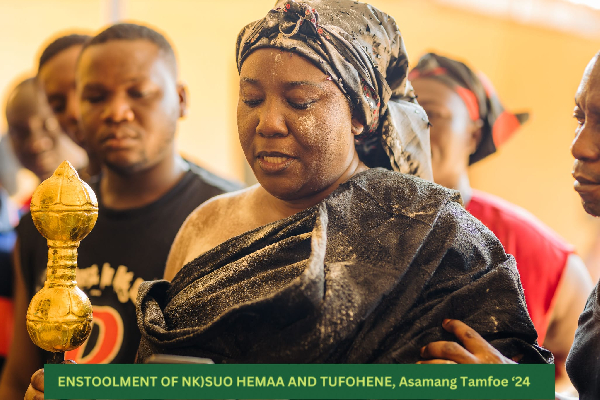
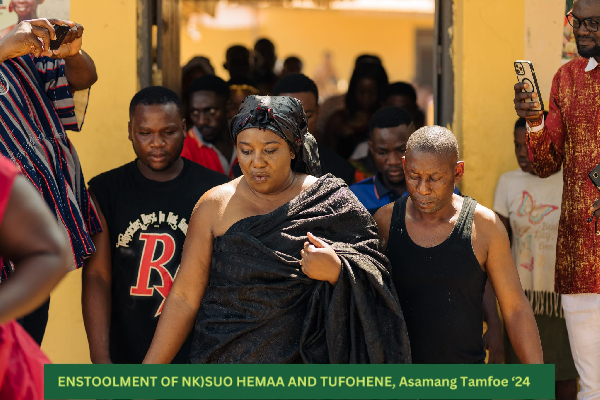
See some photos from the enstoolments of Nkosua Hemaa Ama Bemponmaa, and Tufohene Kofi Opong Kofoh below:
AE

Copyright © 1994 - 2026 GhanaWeb. All rights reserved.










