



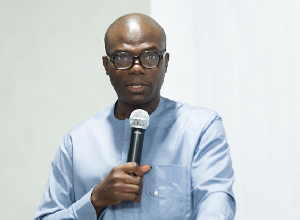
 Sulemana Braimah is the Executive Director of the Media Foundation for West Africa
The Executive Director of the Media Foundation for West Africa, Sulemana Braimah, has raised concerns about the progress of Ghana’s fight against corruption.
Sulemana Braimah pointed out that the country seems to have stagnated in the fight against corruption, as indicated by Ghana’s position on the Corruption Perception Index (CPI) by Transparency International.
He made these remarks while emphasising the role of the media in the fight against corruption at the 2026 National Forum on Media and the Fight Against Corruption in Ghana, held in Accra on March 26, 2026.
He noted that while Ghana’s media has helped chalk some success in the fight against corruption, there is still more to be done because the act has been practised with impunity, as the actors know the media would do nothing about it.
“Throughout our history, the media has played a pivotal role in shaping public discourse and holding power to account. Indeed, in our country today, investigative journalism has proven to be one of the most critical tools in our collective effort to promote transparency, accountability, and good governance.
“It is often said that journalism mostly agrees is about printing, but today we say it is about publishing or broadcasting what someone else doesn’t want published or broadcast, and everything else, as we say, is public relations. That reminder, I believe, should continue to guide all of us as journalists in our effort to contribute towards accountability, transparency, and good governance in our country.
He added: “But while we acknowledge the progress that has been made so far, we must also confront what perhaps is the uncomfortable reality, and that corruption remains deeply entrenched in Ghana. In fact, they say that corruption tends to hide in the darkness, but in our context, it appears corruption walks in broad daylight.”
The 2026 National Forum on Media and the Fight Against Corruption in Ghana was organised by the Media Foundation for West Africa in collaboration with the Economic and Organised Crime Office (EOCO) and the Ghana Anti-Corruption Coalition, with funding from DW Akademie and Deutsche Gesellschaft für Internationale Zusammenarbeit (GIZ).
It brought together journalists, anti-corruption institutions, legal practitioners, and civil society actors from across the country to examine how the media can more effectively drive accountability and transparency.
MFWA, GIZ train 30 Ghanaian journalists in investigative journalism and anti-corruption reporting
BAI
'I was sacked like a goat' Henry Quartey fumes after being chased away at Newtown

Copyright © 1994 - 2026 GhanaWeb. All rights reserved.










