



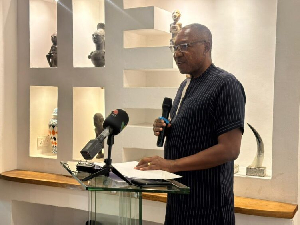
 Dr Clement Apaak is Deputy Minister of Education
Ghana’s Deputy Minister of Education, Dr Clement Abas Apaak, has called for a unified African approach to foundational learning.
Addressing a diverse delegation that included officials from Togo, Senegal, and Rwanda on Friday, March 27, 2026, Dr Apaak positioned Ghana’s early childhood development initiatives as a blueprint for the continent’s educational future.
The meeting followed an extensive field visit to the Upper East Region, where international observers witnessed the practical application of the Ghana Education Service (GES) and Lively Minds partnership.
Dr Apaak emphasised that the success of the programme lies in its integration into the very fabric of government structures, rather than existing as a standalone pilot.
“Through the leadership of the Ghana Education Service and in partnership with Lively Minds, we have implemented an approach that is fully embedded within government structures. This is critical. Too often, successful interventions remain isolated pilots. What distinguishes this model is that it is designed for sustainability, scale, and long-term national impact.
...Distinguished colleagues, the evidence is clear: investment in early childhood development delivers the highest returns not only in education but also in health, productivity, and national development. If we are serious about improving learning outcomes, reducing inequality, and building resilient economies, then we must start early and we must get it right.”
He noted that the model’s focus on play-based learning and community-driven accountability has moved beyond theoretical success into measurable, large-scale impact within the public system.
Throughout his address, the Deputy Minister highlighted the economic and social imperatives of early intervention.
He argued that the highest returns on national investment are found in the earliest years of a child’s life, affecting long-term outcomes in health, productivity, and overall equality.
By empowering parents—particularly mothers—as active participants in the classroom, the initiative has fostered a sense of local ownership that Dr Apaak believes is essential for any sustainable African innovation.
As Ghana prepares for a nationwide scale-up of these early childhood strategies, the atmosphere at the lunch meeting was one of regional solidarity.
Dr Apaak urged the visiting representatives to view the model not merely as a Ghanaian achievement but as a scalable African solution to a shared continental challenge.
“This model works because it is simple, inclusive, and community-driven. It improves learning outcomes through play-based approaches. It empowers parents, especially mothers, as active partners in education. It strengthens community ownership and accountability. And importantly, it delivers results at scale within the public system.
This is not theory. This is impact. To our distinguished visitors, let me emphasise this: what you have seen is not just a Ghanaian innovation; it is an African solution. It is adaptable. It is scalable. And it is grounded in principles that resonate across our continent—community engagement, local ownership, and strong government leadership.”
He stressed that when nations collaborate on foundational education, they do more than improve schools; they fundamentally alter the trajectory of the entire continent.
"We are equally committed to sharing our experiences, learning from others, and strengthening collaboration across borders. Because the challenges we face are shared, and so too must be the solutions. Distinguished guests, let us move forward not as individual countries working in isolation, but as partners united by a common purpose.
A purpose to ensure that every African child, regardless of where they are born, has the opportunity to learn, to thrive, and to succeed. If we get early childhood development right, we change the trajectory of our nations. And if we work together, we can change the future of our continent.”

Copyright © 1994 - 2026 GhanaWeb. All rights reserved.










