



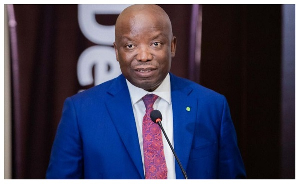
 Managing Partner of Deloitte Ghana, Daniel Kwadwo Owusu
The Managing Partner of Deloitte Ghana, Daniel Kwadwo Owusu, has called on government to prioritise digitisation, technical education, and private sector support to address unemployment and drive sustainable economic growth in Ghana.
Speaking at the 10th Ghana CEO Summit on May 26, 2026, Owusu said Ghana’s economy had shown signs of recovery but warned that critical structural challenges still required urgent attention.
According to him, the country’s economic indicators were beginning to improve following the completion of the Economic Credit Transition Programme and the introduction of the 36-month Policy Coordination Instrument (PCI).
However, he expressed concern over weak domestic revenue mobilisation, noting that Ghana’s tax-to-GDP ratio remains below the Sub-Saharan African average.
CEO Governance Compact to drive investment, job creation - President Mahama
“Cash revenue remains below target. This calls for decisive action in our revenue collection systems,” he stated.
Owusu also welcomed government’s return to the domestic market to raise capital but advised that borrowed funds should be channelled into productive investments, particularly infrastructure development.
He praised the passage of legislation aimed at reducing inflated contracts, budget overruns, and wasteful spending but stressed that implementation remains a major challenge.
He urged government to ensure that the proposed task force operates independently to strengthen accountability and improve public financial management.
Despite Ghana recording average GDP growth rates before and after the COVID-19 pandemic, he said the economy has failed to generate sufficient jobs for the country’s growing youth population.
According to him, sectors such as mining alone cannot absorb the thousands of graduates produced annually by universities and colleges across the country.
“The rapid growth of the youth population calls for immediate diversification of the economy to create real and adequate jobs,” he said.
Owusu further called on government to take advantage of opportunities within the digital economy, e-commerce, artificial intelligence, and digital financial services to create employment opportunities for young people.
He also advocated stronger investment in technical and vocational education, citing countries such as China and Japan as examples of economies that successfully used technology-driven education to transform their industries.
On the manufacturing sector, he urged government to introduce targeted incentives and relief measures to support local industries to expand operations and employ more workers.
He referenced the National Policy on Integrated Oil Palm Development as one of the promising initiatives capable of creating jobs if properly implemented.
Owusu also backed Ghana’s new investment promotion framework, stating that the reforms would modernise the country’s investment regime and make Ghana more attractive to both local and foreign investors.
He encouraged businesses to take advantage of the framework to drive investment and economic expansion.
He called for stronger collaboration between government, the private sector, and civil society to promote sustainable business growth, innovation, and inclusive decision-making.
“I encourage government, the business community, and civil society to foster collaboration to drive sustainable business, stimulate job creation through innovation, and enhance inclusive decision-making,” he said.
ANAS/MA

Copyright © 1994 - 2026 GhanaWeb. All rights reserved.










