



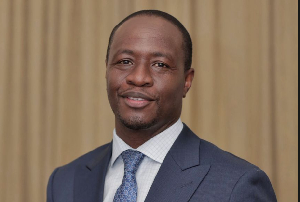
 Fiifi Boafo, Former Head of Public Affairs at COCOBOD
Former Head of Public Affairs at Ghana Cocoa Board (Cocobod), Fiifi Boafo, has rejected President John Dramani Mahama’s claim that the current cocoa producer price represents the best outcome for Ghana.
Addressing Parliament in his 2026 State of the Nation Address, Mahama announced that the cocoa producer price has been adjusted downward to GH¢41,392 per tonne, equivalent to GH¢2,587 per bag, for the remainder of the 2025/2026 crop season.
The President explained that severe liquidity constraints in the cocoa sector made the revision necessary, noting that maintaining the previous price would have required the government to secure billions of cedis in additional borrowing, a move he warned could undermine recent fiscal stability gains.
Speaking to GhanaWeb’s Western Regional Correspondent, Thomas Tetteh, Fiifi Boafo argued that the reduction in the cocoa producer price cannot be justified as beneficial to farmers.
At the start of the cocoa season, farmers were reportedly assured of a minimum guaranteed price of GH¢3,625 per bag. The subsequent revision to GH¢2,587 per bag represents a nearly 30 percent reduction, which Boafo described as a significant setback for farmers who had already invested in farm maintenance, inputs, and labour based on the earlier figure.
“After making that investment, after preparing the farms, buying farm inputs and paying farm hands, you now pay the farmer GH¢2,500. How does that motivate the farmer?” he questioned.
The government has explained that the adjustment was necessitated by falling global cocoa prices. At the time the Finance Minister announced the revised rate, international market prices had declined from earlier highs.
However, Boafo criticised the approach, arguing that cocoa pricing should not rely solely on prevailing or spot market prices at the time of announcement. He maintained that authorities should use weighted averages and forward contracts when fixing producer prices.
According to him, the failure to sell cocoa when global prices were higher contributed to the current shortfall, leaving farmers to bear the cost.
“We are here because the government decided to sell at the wrong time, allowed the market to fall, and then decided to sell at a lower price,” he said.
The debate also highlights the financial challenges facing the Ghana Cocoa Board. Estimates indicate the Board requires about GH¢2 billion to purchase additional cocoa at the new rate, while outstanding arrears to farmers reportedly exceed GH¢11 billion.
Although cost-saving measures, including salary adjustments, are projected to save about GH¢40 million, Boafo argued that such measures are insufficient compared to the scale of the financial gap.
He stressed that the focus should be on the welfare of cocoa farmers rather than partisan considerations.
“Whether it is NPP or NDC, the farmer is losing, and any solution that does not restore the farmer to the initially expected GH¢3,625 per bag fails to address the core problem,” he stated.

Copyright © 1994 - 2026 GhanaWeb. All rights reserved.










