



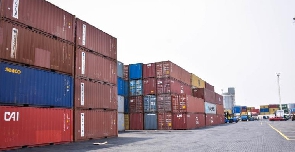
 Containers at the ports
Ghana’s import-dependent economy is at significant risk as disruptions in the Strait of Hormuz threaten supply chains and drive up the cost of essential goods.
Fred Asiedu Dartey, Head, Freight and Logistics at Ghana Shippers Authority, said 45.7 per cent of Ghana’s imports originated from the Far East, including rice, wheat, fuel, pharmaceuticals, machinery, and industrial goods.
Dartey, speaking at a media forum powered by the Ghana Ports and Harbours Authority (GPHA), explained that any disruption along the route would inevitably affect availability and prices of these commodities.
“The cost of landed imports is expected to increase significantly due to rising freight charges, insurance premiums, and operational costs,” he said.
He cautioned that Ghana could experience a repeat of COVID-19-era shipping costs, where container freight rose to between 13,000 and 15,000 dollars.
He said shipping lines have begun imposing additional surcharges on cargo as disruptions in the Strait of Hormuz continue to escalate operational costs across the maritime industry.
Dartey stated that vessel operators were introducing surcharges ranging between 1,000 and 4,000 dollars per TEU to offset rising fuel and operational costs.
He explained that bunker fuel accounts for between 30 and 60 per cent of vessel operating costs, and any spike in fuel prices directly affects freight charges.
“These additional costs are passed on to cargo owners and eventually to consumers,” he said.
Dartey added that some shipping lines had introduced new charges such as “equipment imbalance surcharges”, while others were cancelling bookings due to uncertainty.
He warned shippers to scrutinise invoices and report unfair charges, noting that the GSA had already intervened in cases where unjustified surcharges were applied.
Captain Micah added that rising crude oil prices would have a ripple effect across all sectors, including transportation, agriculture, and manufacturing.
He said the disruption in the Strait of Hormuz was expected to have far-reaching effects beyond oil, impacting agriculture, pharmaceuticals, and global financial systems.
He explained that the Gulf region was a major hub for fertilizer production, and any disruption could affect agricultural output, particularly in regions dependent on imports, adding that pharmaceutical supply chains, stock markets, and investment flows could also be destabilised.
“Once energy prices rise, it cascades across all sectors and affects the cost of living globally,” he said.
The experts warned that prolonged disruption could lead to inflationary pressures and economic instability in both developed and developing economies.

Copyright © 1994 - 2026 GhanaWeb. All rights reserved.










