


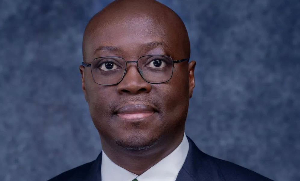
 Dr Cassiel Ato Forson is the Minister of Finance
Finance Minister Dr Cassiel Ato Forson has called for a decisive break from the economic patterns that have held Ghana back, saying the country must build on recent stabilisation efforts to secure lasting prosperity.
Speaking during his New Economy engagement with faculty and students at the University of Ghana, Dr Forson said Ghana had reached a critical point where public policy must address the underlying causes of the country’s economic challenges rather than focus solely on immediate pressures.
“We have stabilised the present. Now we must secure the future,” he declared.
The Finance Minister described the next phase of Ghana’s economic journey as a test of the country’s willingness to make difficult but necessary decisions that would shape the prospects of future generations.
“History does not wait for countries that are afraid to decide,” he said.
“There are moments when a nation must make a clear break with old patterns. There are moments when public policy must stop managing symptoms and start changing structures. This is such a moment for Ghana.”
His remarks placed structural transformation at the centre of the government’s New Economy agenda, with economic stability serving as the foundation for building a more productive economy capable of creating decent jobs, increasing incomes and improving living standards.
Dr Forson’s argument was that stabilising the economy, while necessary, would not be enough to guarantee long-term prosperity unless the country also addressed the structural weaknesses that have limited production, industrialisation and job creation.
The next phase, he indicated, must focus on changing how Ghana produces, processes and trades its goods, while creating an environment in which businesses can expand and workers can benefit from economic growth.
That ambition, he said, requires Ghana to produce more at home, add value to what it grows and mines, and expand opportunities for local businesses and workers.
Rather than continuing to depend heavily on the export of raw materials, the country must strengthen its capacity to process agricultural produce and mineral resources locally. Such a shift could support industrial development, create jobs across the value chain and enable Ghana to retain a greater share of the value generated from its natural resources.
The New Economy agenda is therefore intended to move the country beyond short-term economic recovery towards a more sustainable model of growth driven by productivity, domestic production and value addition.
For Ghana, this would also mean creating stronger links between agriculture, manufacturing, technology and other productive sectors, allowing businesses to source more inputs locally and develop products for both domestic and international markets.
The Finance Minister’s message also points to the need for policy decisions that extend beyond immediate political and economic cycles. Building a stronger economy, he suggested, requires consistency in implementing reforms and a willingness to confront longstanding challenges that have constrained the country's development.
The focus on structural change comes as Ghana seeks to consolidate economic stability and translate improvements in key economic indicators into tangible benefits for households and businesses.
However, the success of the New Economy agenda will depend on how effectively policies are implemented, how much investment they attract and whether the resulting economic activity generates sustainable employment and higher incomes.
The engagement at the University of Ghana provided an opportunity for students and faculty to hear the government's economic vision and consider the policy choices required to move the country from stabilisation to long-term transformation.

Copyright © 1994 - 2026 GhanaWeb. All rights reserved.










