



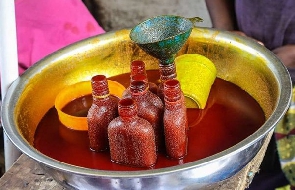
 Pure palm oil is relatively thick and does not separate quickly
Palm oil is a staple in many Ghanaian and African kitchens. The oil, derived from the mesocarp of the oil palm fruit, is a key ingredient in a variety of dishes, from stews and soups to frying.
Ghana is reportedly the 10th largest producer of palm oil in the world, with production carried out by both smallholder farmers and large plantations, mainly in the Western, Central, Eastern, Ashanti, and Volta Regions.
However, the Food and Drugs Authority (FDA) has warned that some Ghanaian traders are still using the banned Sudan IV dye to adulterate palm oil products. The Authority describes this as troubling and detrimental to consumers’ health.
Findings show that Sudan III and azo dyes are the most widely used colorants added to palm oil.
Health experts and researchers have affirmed that these dyes are unsafe for consumption, potentially causing digestive problems, food poisoning, allergic reactions, organ malfunction, and, in severe cases, death.
GhanaWeb Business outlines five ways to detect adulterated palm oil in the market:
1. Check the colour
Pure palm oil has a natural reddish-orange colour, which may vary slightly depending on processing. An unnaturally bright or excessively deep red hue may indicate the addition of dyes.
2. Smell and taste test
Adulterated palm oil often has an unpleasant smell or leaves a bad aftertaste. Real palm oil has a natural, mildly nutty aroma that enhances the flavour of dishes.
3. Texture and smoothness
Pure palm oil is relatively thick and does not separate quickly. Oil that is overly runny, watery, or separates into layers soon after sitting may have been diluted with cheaper oils.
4. Smoke test
Fake palm oil tends to smoke quickly when used for cooking or frying, producing excessive smoke within seconds.
5. Home tests
Water test: A small drop of pure palm oil should not dissolve in water. Excessive spreading or unusual sediment may indicate adulteration.
Heat test: Natural palm oil melts evenly and releases a characteristic aroma when heated, while adulterated oil may produce unusual fumes or separate.
SP/MA
All you need to know about Ghana's new vehicle number plates | BizTech:



Copyright © 1994 - 2025 GhanaWeb. All rights reserved.










