



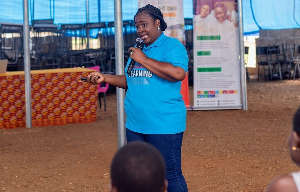
 Director for Gender in the Volta Region, Madam Thywil Eyra Kpe
The Director for Gender in the Volta Region, Madam Thywil Eyra Kpe, has cautioned young people that knowingly engaging in sexual activity with another person without disclosing an existing HIV or sexually transmitted infection (STI) status can constitute sexual abuse and attract legal punishment.
She explained that under Ghana’s Domestic Violence Act, a person who knowingly has sexual contact with another person while concealing the fact that they are living with HIV or another STI may be committing an offence punishable by law, including imprisonment.
Madam Kpe gave the warning during a Sexual and Reproductive Health Rights session at the Young and Safe Bootcamp organised at Ho Technical Institute by Node Eight, LoveAid and the Ghana Education Service.
The programme brought together experts to educate students on issues including sexual health, mental health, cyber hygiene and responsible decision-making.
According to her, young people must understand that sexual and reproductive rights come with responsibilities, including protecting the health, safety and dignity of others.
“Under the Domestic Violence Act, if a person has sexual contact with another person knowing fully well that he or she has HIV or any other sexually transmitted disease, without informing the person concerned, that can be deemed as sexual abuse and is punishable under the law,” she said.
Madam Kpe explained that the law protects individuals by ensuring that sexual relationships are based on honesty, consent and respect for the rights of all parties involved.
Beyond sexual health education, the Gender Director also educated students on Ghana’s abortion laws, explaining that while abortion is generally restricted, it is permissible under specific circumstances provided by law.
She said abortion may be legally carried out where a pregnancy poses physical, psychological or other health risks to the mother or child, or where the pregnancy results from rape, defilement, incest or other sexual offences.
However, she stressed that even in situations where abortion is legally permitted, it must only be performed by qualified health professionals in registered health facilities.
“Where abortion becomes legal or permissible, it must be done in a registered facility by a registered professional, a doctor or a midwife who is licensed to carry out that medical procedure,” she explained.
Madam Kpe cautioned young people against unsafe abortion practices, including taking unapproved drugs or seeking assistance from unqualified individuals, warning that such actions can put lives at risk and may amount to criminal offences.
She introduced students to the Ghana Health Service Comprehensive Abortion Care programme, which provides legal abortion services and support to prevent complications associated with unsafe procedures.
“The aim is to provide the right services so that people do not end up in conditions that can endanger their lives or result in the death of the pregnant woman,” she said.
The Gender Director further encouraged students to understand their rights to bodily autonomy while recognising their responsibility to respect the rights of others.
“This body we have is our own, but it must also be taken care of. Young people have the right to bodily autonomy, but this autonomy is subject to the law. They must ensure that while protecting their reproductive health rights, they do not engage in behaviours that violate the rights and sexual integrity of others,” she stated.
She urged students to avoid sexual violence and other harmful behaviours, stressing that violence has serious consequences for both victims and perpetrators.
“Violence is real. They must not be violators. They must not engage in sexual violence. They must protect themselves as well as the well-being of other people around them,” Madam Kpe added.
Speaking in an interview, Confidence Lewu, one of the student participants, said the training had increased his understanding of sexual and reproductive health issues, particularly the importance of men understanding women’s health.
“Even though I am a guy, I think it is good as a guy to learn something about how a woman’s body functions so that when you get married, and she is going through something, you can support her,” he said.
He also encouraged students to practise self-control and seek guidance from teachers and counsellors whenever they face challenges.

Copyright © 1994 - 2026 GhanaWeb. All rights reserved.










